The Purse d’Resistance is now a Backpack!

Purse d'Resistance

Purse d'Resistance

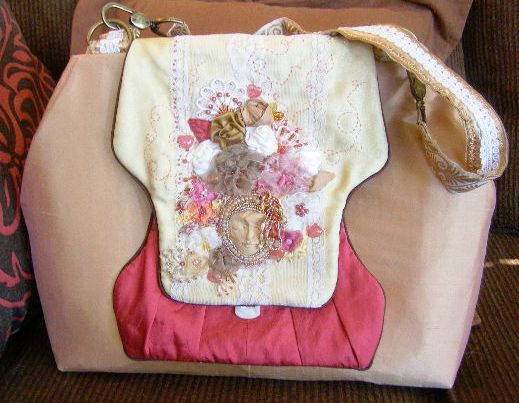
Last summer, the Purse d’Resistance was created to carry all the necessities during a month of travel.   Unfortunately, somewhere in the creative process, visual and textural interest trumped common sense.

As a result, the base and body of a purse that was specifically made to travel through 5 airports, two train stations and multiple subway rides, was constructed of a beautiful, albeit structurally-challenged, apricot colored silk dupioni.  Not my best engineering moment.

Even with metal purse “feet”, a purse base sewn from a light-colored silk is just not going to survive a summer of travel.

So, a remake, an upcycle, a re-engineering took place.

The Backpack d'Resistance

The Backpack d'Resistance

The embellished flap and hardware was re-used to create the Backpack d’Resistance.

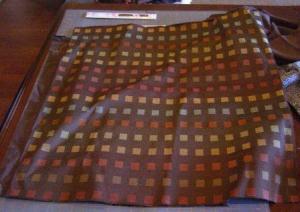
The body of the backpack is a coral linen left over from an ill-fated attempt to sew a dress.

Having learned a lesson about purse bases and light colors, I added a layer of dark brown ultrasuede to form the base.

The development of the pattern required much more time that it really should have.  There are more than a few backpack patterns available.

However, I did not want a drawstring -I don’t trust them – I believe drawstrings all hail from the 1960’s and seize every opportunity to cry “BE FREE” and release everything!

Backpack Back

Backpack Back

The dimensions I finally decided upon were those of a paper bag from a gift store!

Three snaps hold the backpack securely closed.

The straps are simple brown grosgrain ribbon. The vertical seams in the fabric are leftovers from the attempted dress, but worked perfectly for lower strap placement on the back.

The lining is a beige/white giraffe print.  Interior pockets were the same as those in the Destashification Make-Up Bag.

Another lesson learned from my early purse making experiments is that purses must be lined in a light color – dark colors create a “black hole”.  Dark purse interiors make it impossible to find anything!   Now, if technology could just develop a ink-pen-proof light colored fabric for purse linings!

Embellishing is the Fun Part!

Embellishing is the Fun Part!

When time allows I will post the pattern and a tutorial for the backpack.  The flap is perfect for all that fun embellishment!


Posted in Accessories, Crazy Quilting, Embellishment, Goddess, Purses, Repurpose, Sewing, Stash Couture | Tagged | 3 Comments

Surely, there is a pattern that will fit…

A comment stated and heard repeatedly by those that sew.

Included in the 2012 New Year’s Resolutions was to do “whatever was necessary” to sew a top that actually fit!

https://i0.wp.com/www.fitnessgurusam.com/wp-content/uploads/2010/02/xx-tape-measure-brooch-big.jpgTwo requirements were common themes across every website visited on pattern fitting,

1.  Measuring myself with a tape measure.

2.  Making a muslin.

I would not describe my reaction to these suggestions as “irate” – I was merely “indignant!”

Measure myself?  What good could possibly come from that?  I have worn the same size pattern since high school!

A muslin? For three generations, women in may family have sewn clothing – and I never remember so much as a mention of making a muslin – a sloper, maybe…but not a muslin.

https://i0.wp.com/mccallpattern.mccall.com/filebin/images/product_images/Full/M2718.jpg

McCalls 2718 - A "Sloper"

So, those suggestions had to process for quite some time….

…while I visited the Pattern Stash for inspiration.

…additional processing was required, so I visited the Fabric Stash for more inspiration.

With pattern, fabric, and coffee in hand, I finally accepted the measuring and “muslining” might be worth the time and effort.

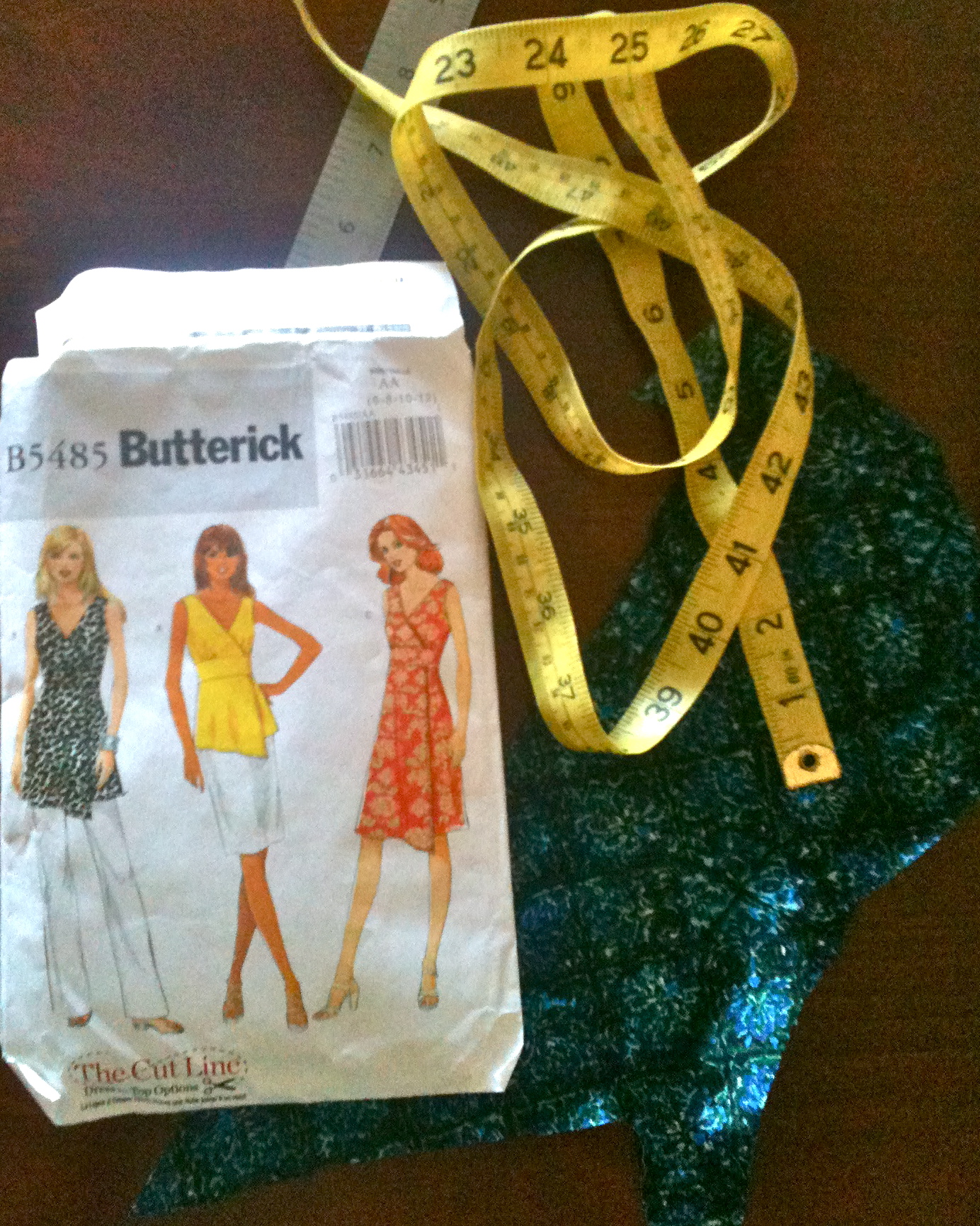
Butterick  , the fabric and the dreaded tape measure

Butterick 5485, the fabric, and the dreaded tape measure

Butterick 5485 was the pattern of choice.  Stacy and Clinton would approve of its:

  1. Empire Waist  – is the most flattering fit!
  2. Deep V-neck – elongates the body
  3. Body – floats away from the waist band.

It is also Arizona-approved as it is sleeveless.

Bonus: The pattern is also labeled with finished measurements.

Found the dreaded measuring tape and measured away.

Bust was fine. Waist was fine. (OK, so maybe one size larger than in high school!)

Underbust – not so fine.  Apparently, I have a bizarrely large ribcage.  Had to add 3″.

Then on to the muslin – only muslin had nothing to do with it.  It was made of a Stash Fabric that was similar to the final project fabric, but “the polyester” is just not right.

The “muslin” revealed a few suggestions:

  1. Lose 10 pounds
  2. Lengthen upper bodice 1/2″.
  3. Cut armholes 1/2″ higher.
  4. Reduce gathers by using a 1″ dart and then gathering remainder.
  5. Shorten band by 1.25″.  It was way too wide.
  6. Lose 10 pounds.

Suggestions 1 and 6 aside, I cut out the pattern using the adjustments.

The fabric is a shiny slippery polyester satin, which was not easy to work with.  Each pattern piece had to be “gross” cut (about 2″ extra all the way around pattern piece) and then moved to the ironing board for the final cut.

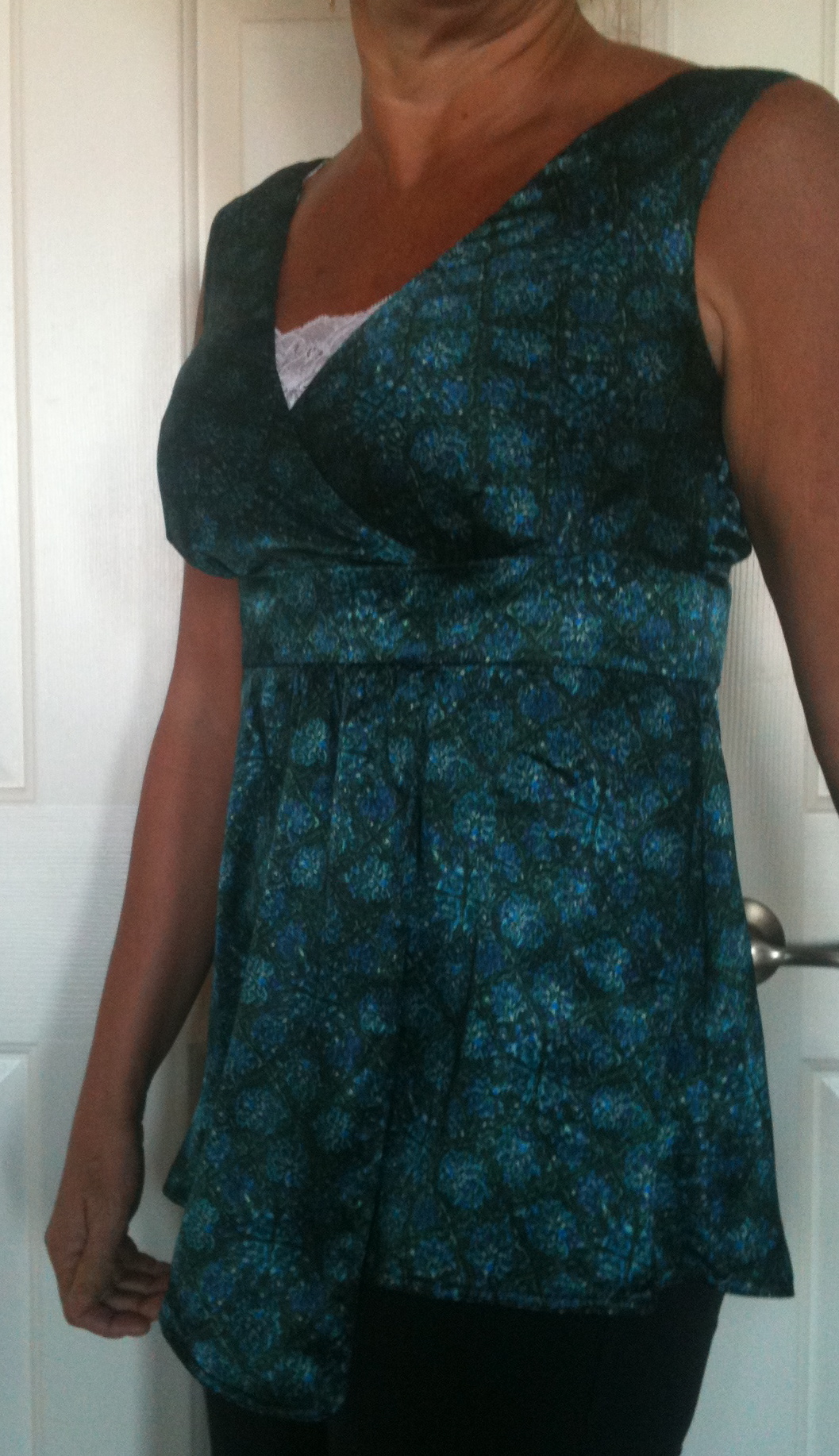
It Fits!

It Fits!

Interfacing.  Sewing.  Invisible zipper.  More sewing.  Some ripping out.  More sewing…

….and it fit!

Side View

Side View - AKA Red Carpet View - now if I can just get Tiffany's to provide diamonds for the occasion!

Apparently measuring and muslining are worth it!

Who knew?

One New Year’s Resolution checked off!

But this process leaves me with three issues to ponder:

  1. Did all those clothes I used to sew really fit or not???
  2. Is it the pattern that doesn’t fit or the body that doesn’t conform?
  3. What causes a bizarrely large ribcage?
Posted in Sewing, Stash Couture | Tagged , , | 1 Comment

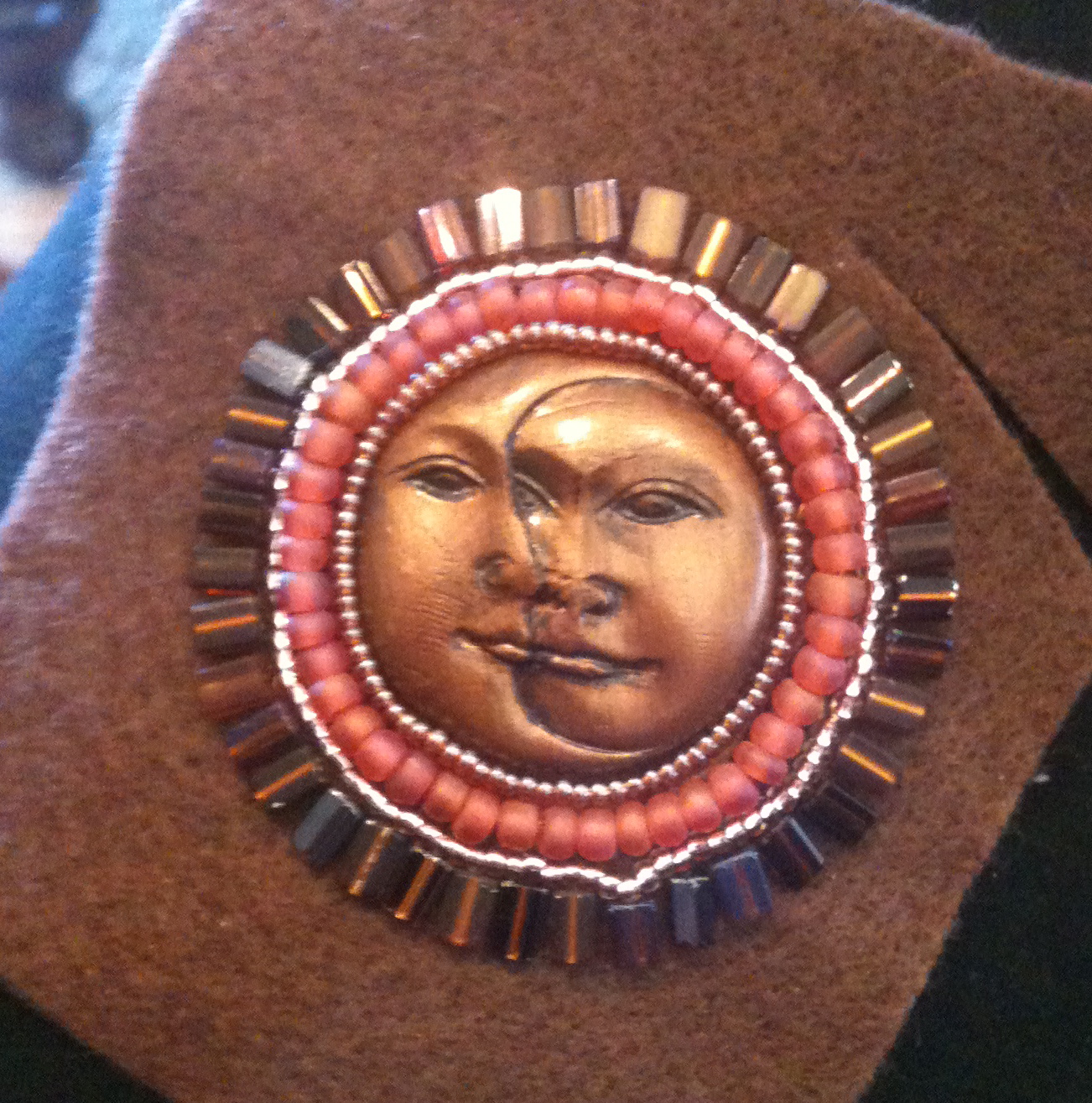
How to Make Those Faces

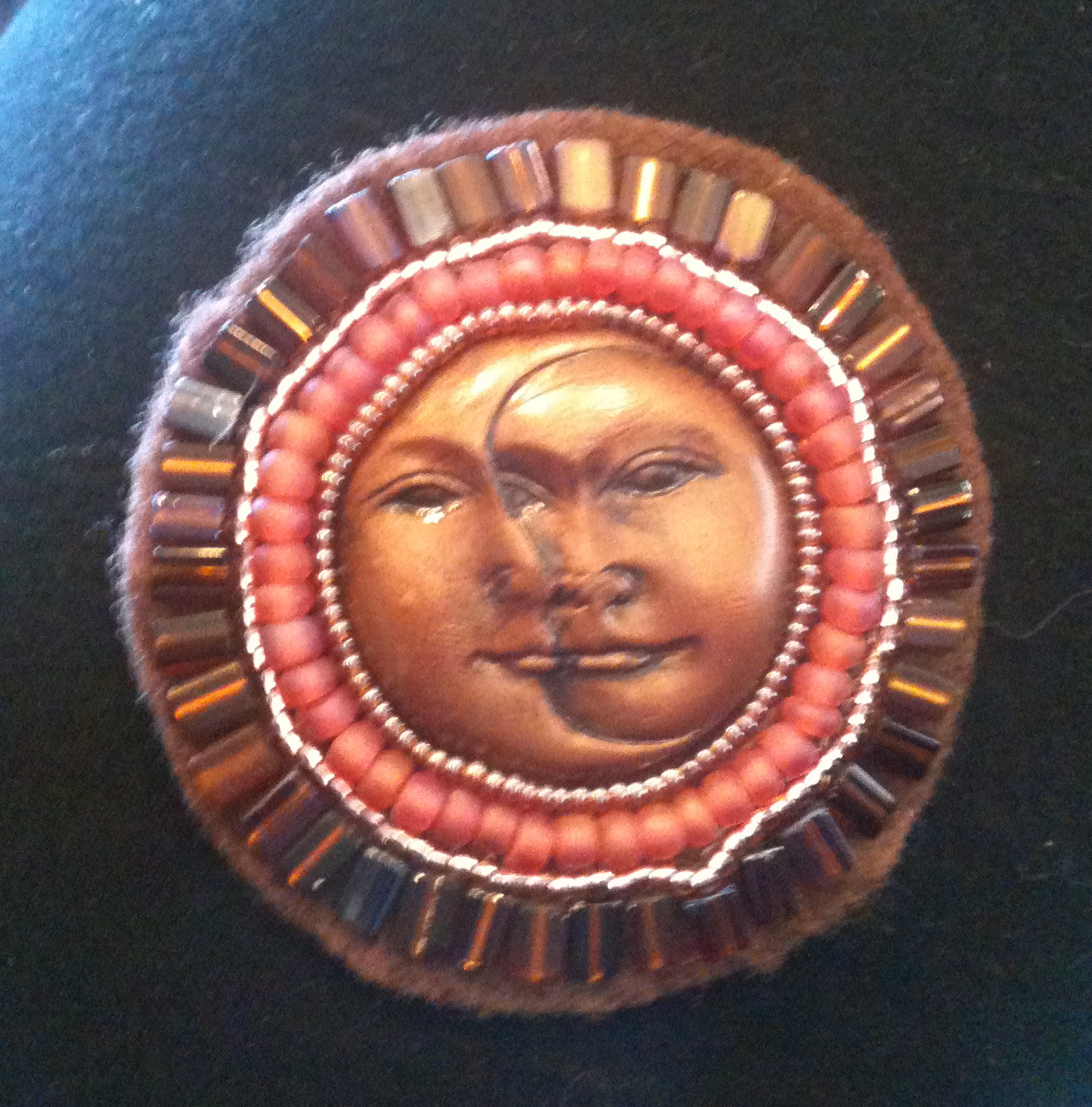
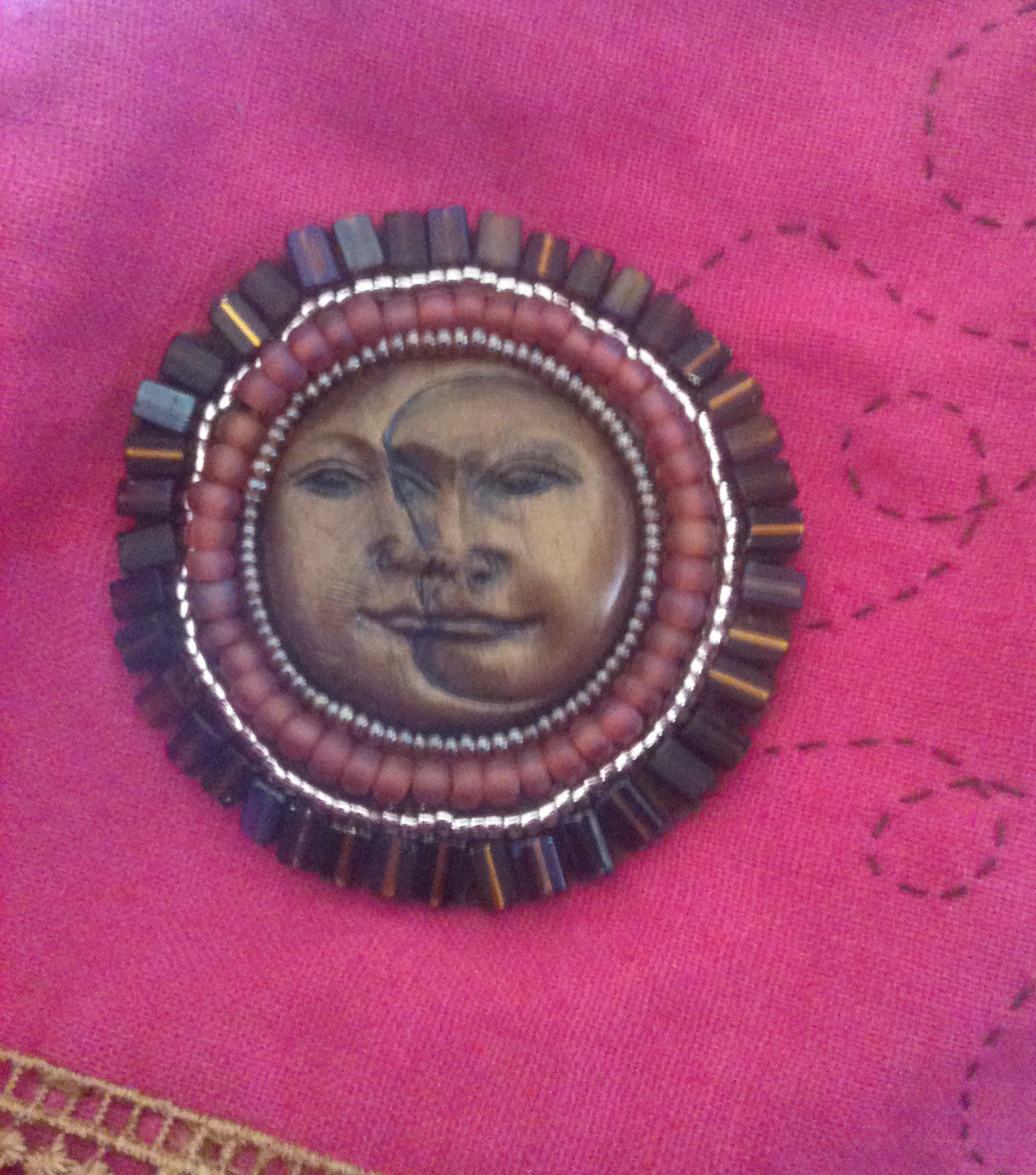
Beaded Face Cabochons add just the right embellishment to purses and jackets.  The beading options are endless!

This post outlines the steps to create a basic beaded face cabochon.

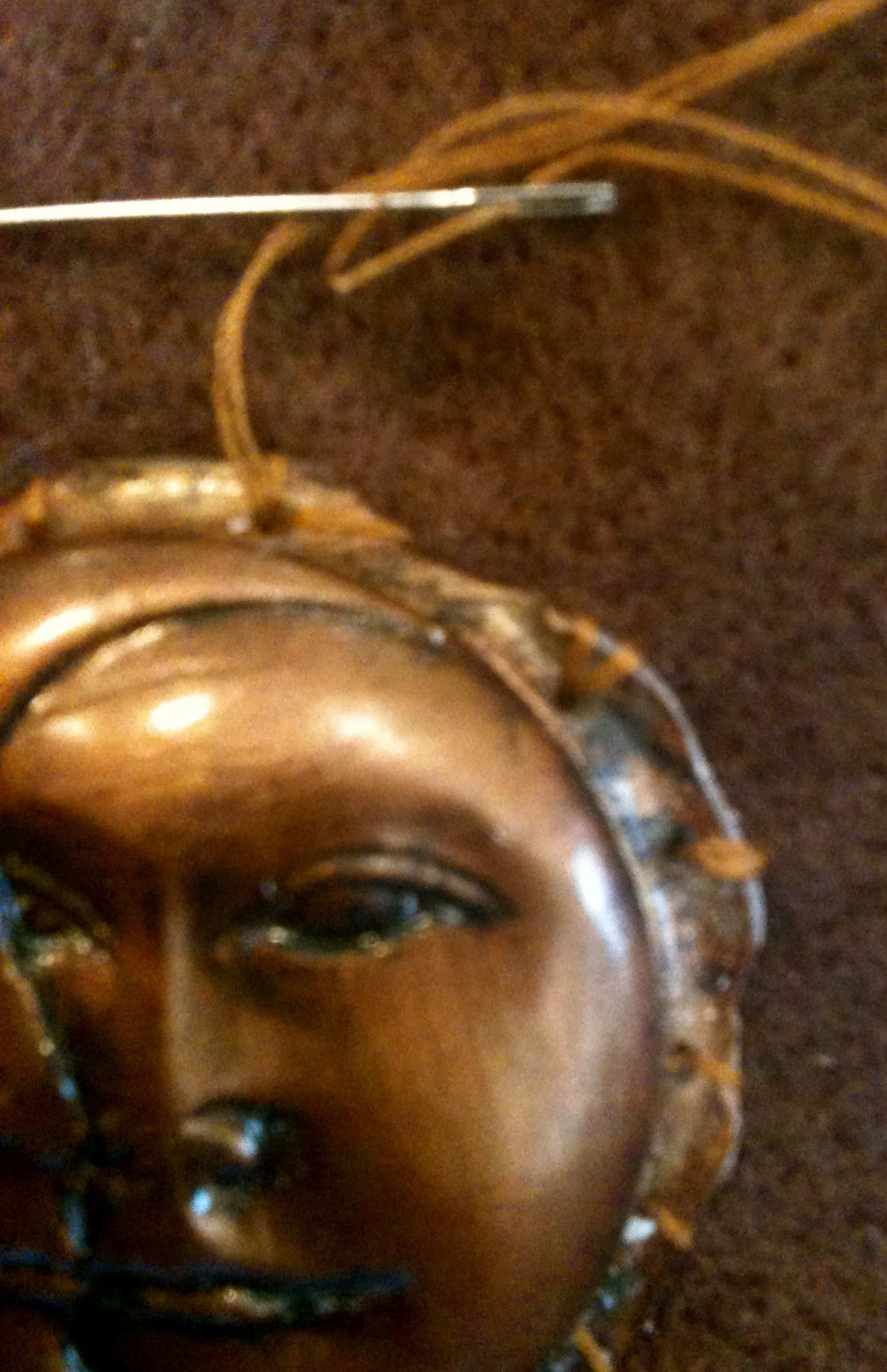
Clay Polymer Face with "sewing holes"

Photo 1: Clay Polymer Face with "sewing holes"

Start with a polymer clay face.  They are simple to make with polymer clay and face molds.

There are many different ways used to attach the face to fabric – including just using glue.

I sew them on.  But to do that, a small “lip” of clay must formed around the face.  I just push a small amount of clay (no more than 1/4″ inch) over the mold edge to form the lip.

As the lip is not visible when the beading is complete, as shown in Photo 1, it does not have to be perfect.

A quick dusting of corn starch on the face mold will keep the clay from sticking to it – and keep all those details distortion-free!

The directions for clay baking time will be on the package – there is variation among manufacturers.

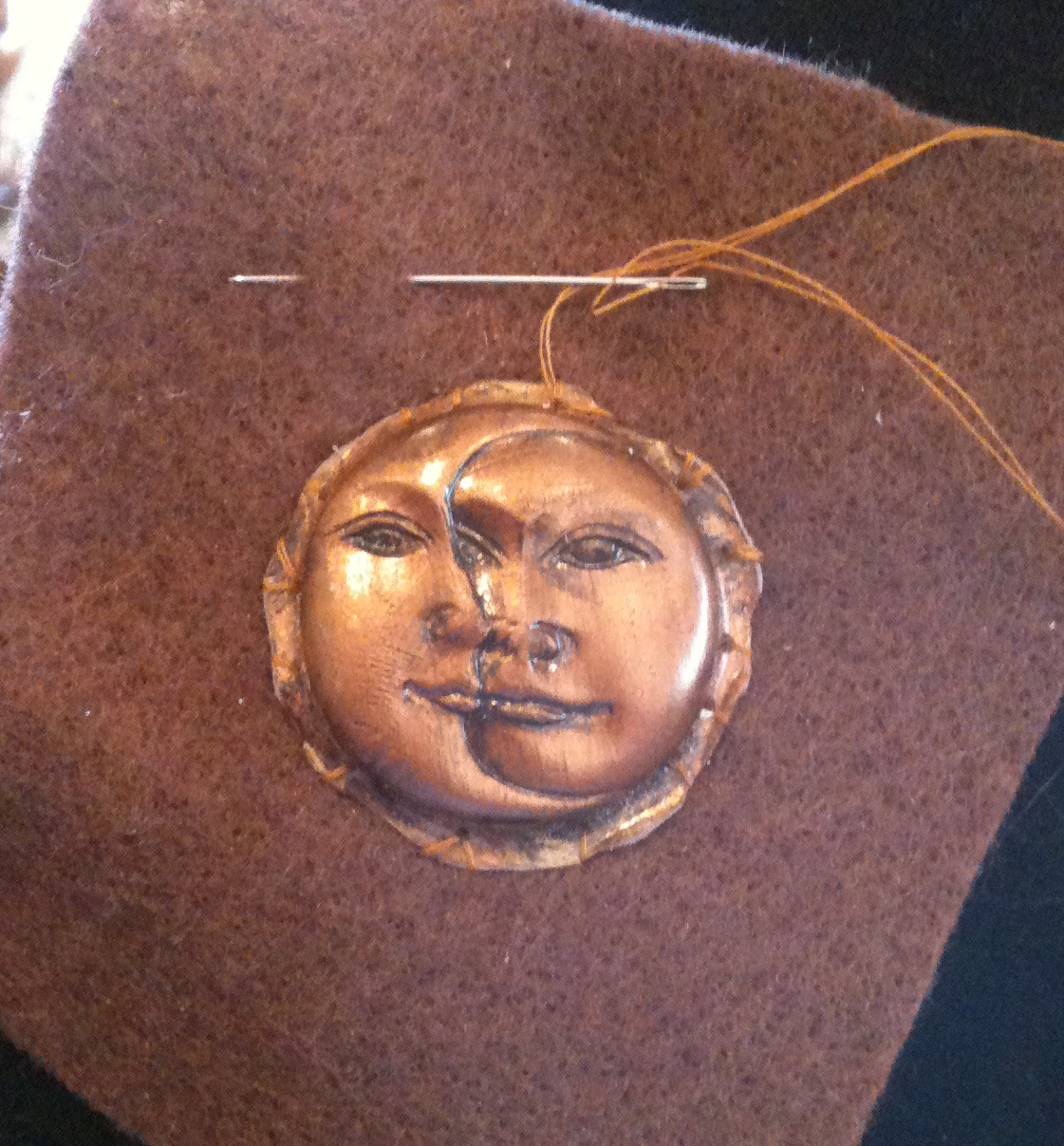
Sewing Cabochon to felt.

Sewing Cabochon to felt.

Drilling the sewing holes is the coolest – because it is Dremel Time!  (Although a drill will also work)  A 1/32″ makes tiny holes – a 1/16″ works just as well.

Drill sewing holes on the lip – as close to the face as possible – all the way around the cabochon – about 1/4″  – 3/8″ apart.

Cut a piece of felt about 3 times larger than the face cabachon and sew it on through all those sewing holes!

Now it is time to bead!

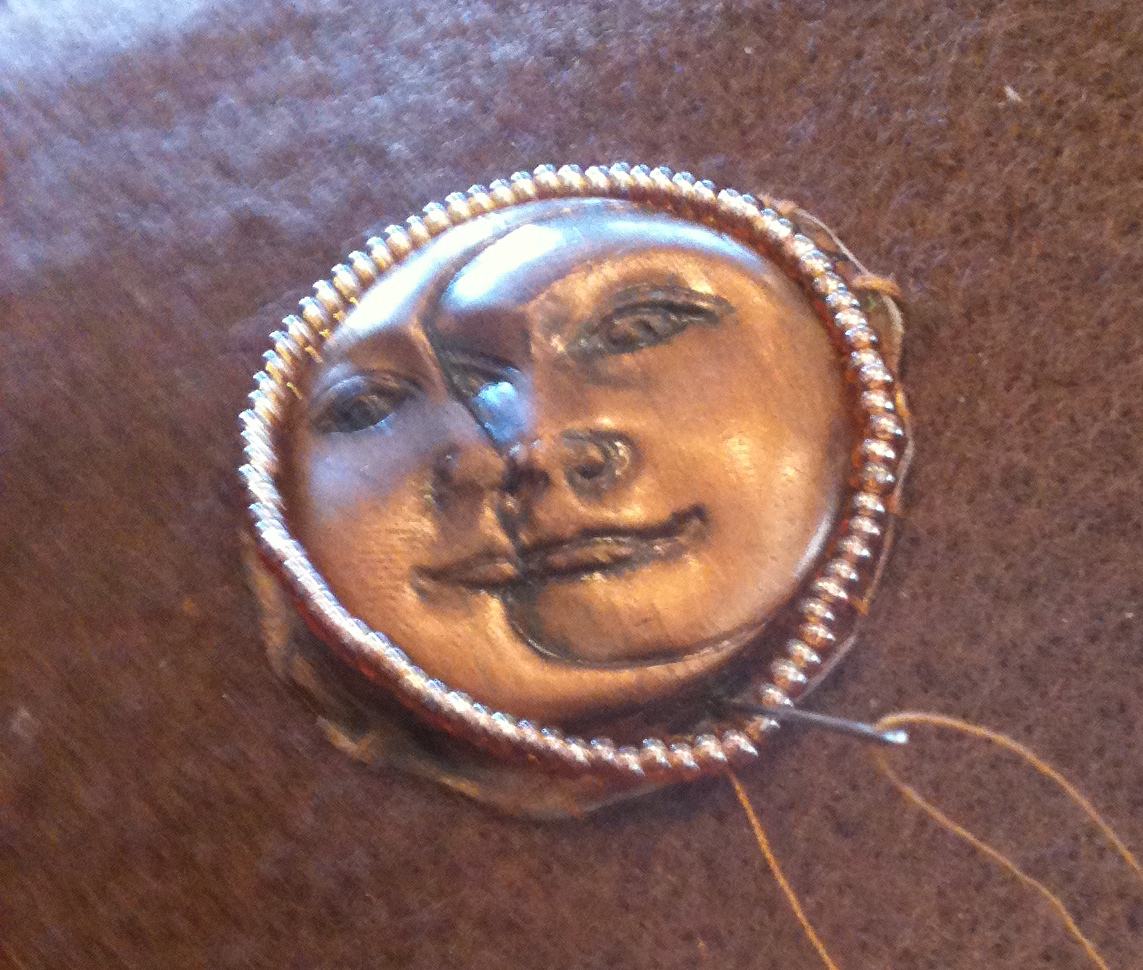
First row of beads - circle completed.

Photo 3: First row of beads - circle completed.

For this project, the beads will be added in concentric circles – nothing too fancy.

Again many methods exist for this, I simply bring thread up through a sewing hole and create a string of beads long enough to circle the face.

Join the beads into a circle by inserting needle through the first three or four beads.

As shown in Photo 3, additional sewing is required to attach the beads all the way around the face.

Using the sewing holes, push needle up, over beads, and then back down the same sewing hole.

Photo 4:  Bring needle up through sewing holes, over beads and then back down same sewing hole

Photo 4: Bring needle up through sewing holes, over beads and then back down same sewing hole

Repeat for all sewing holes.

First row of beads is now secured to both the face cabochon and the fabric.

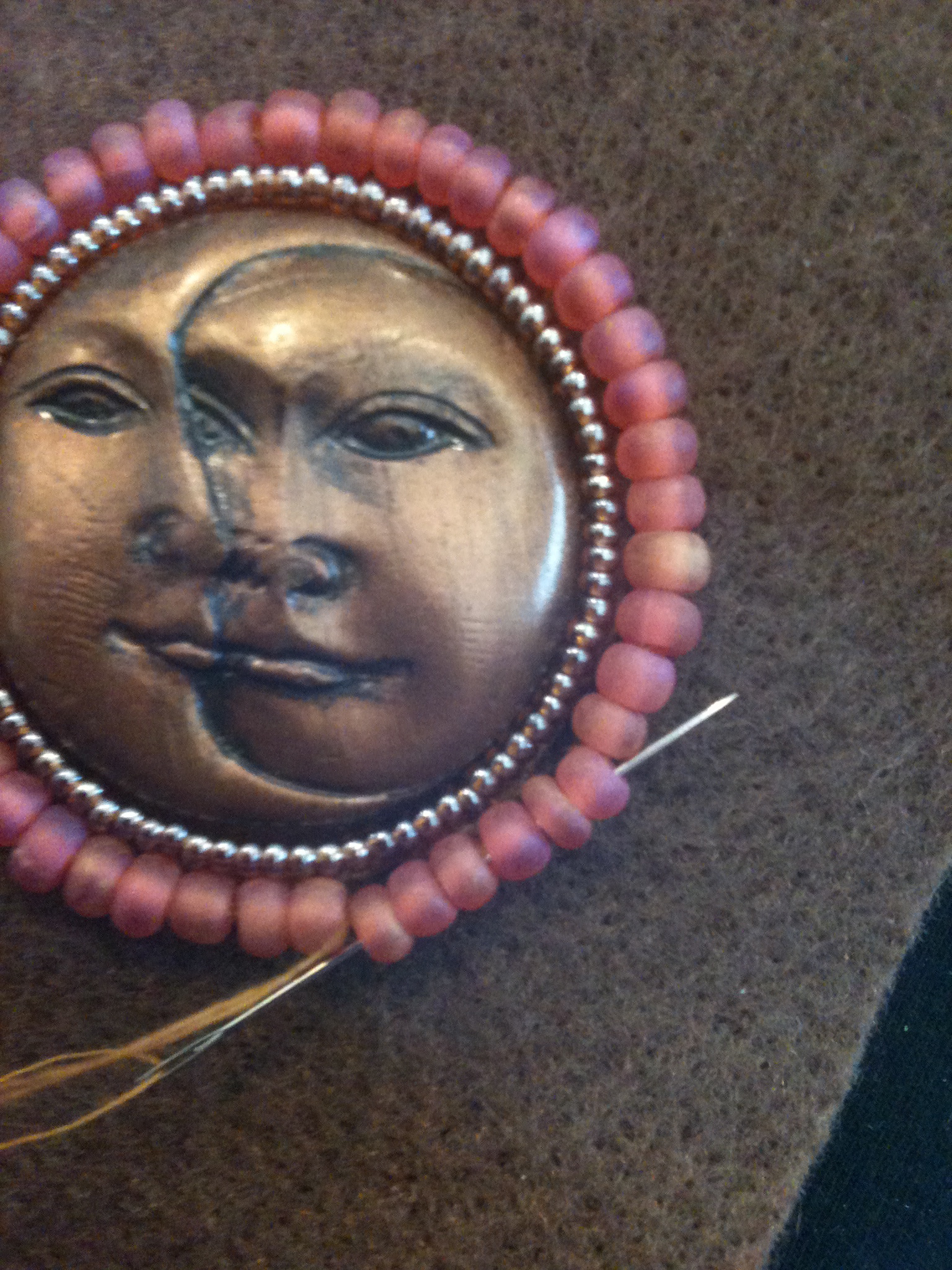
Bring needle up though a different sewing hole and create another string of beads for the second row.

Photo 5:  Sewing second row of beads to fabric

Photo 5: Sewing second row of beads to fabric

Join into a circle.

If this row of beads does not extend beyond the polymer clay lip, attach it in the same manner as the first row.

If the second row extends beyond the polymer clay lip, it may be attached by inserting needle through six beads, then down through the felt.

Using numbers for beads to make this easier, if thread went down at bead 6, bring it up a bead 3, through beads 3 – 9, down at bead 9, then up at bead 6, through beads 6 – 12…etc.  Sort of a backstitch.

This backstitching securely attaches the beads to the underlying felt – and to each other.

Photo 5:  Final Row of Beads sewn to underlying felt

Photo 5: Final Row of Beads sewn to underlying felt

Repeat for the next row of beads.

The final (4th) row of beads here are sewn on in a radial manner.  Each was sewn on individually.

Cut the felt very close to last row of beads (approx 1/8″).

Trim felt to 1/16"

Trim felt to 1/16"

Trim to 1/16″, being careful not to cut through any threads.

Place on surface of purse or jacket or whatever item it is to be added to.

Baste with a few stitches and then stitch through final row of beads, felt, and underlying fabric.  For this example, I sewed one stitch between each bead and then one stitch through each bead.

Face Cabochon secured to linen jacket.

Face Cabochon secured to linen jacket.

Yes, a lot of stitches, but doing so makes the felt disappear – the cabochon is sewn on very securely.

If additional rows of beading is desired, just follow the process above for each row.

Posted in Crazy Quilting, Embellishment, Goddess, Tutorial, Uncategorized | Tagged | 2 Comments

More Football = More Knitting

Silk Sage Sweater: Completed in a Football Weekend!

Silk Sage Sweater: Completed in a Football Weekend!

Four Football Playoff Games + Pre-Game Shows + Post-Game Shows = One Silk Sage Sweater.

silk sage pattern 2

Coats and Clarks Quick Petal Cardigan circa 1968

Yarn from the Stash and a knitting pattern from 1968!

The Stash contained two cones of sage green  Elann.com Soie Bambou, a silk bamboo double knitting weight.  The cones were from different dye lots.

Doubling the yarn not only eliminated the unmatched dye-lot concern, but also produced a light-as-a-feather bulky weight knitting yarn

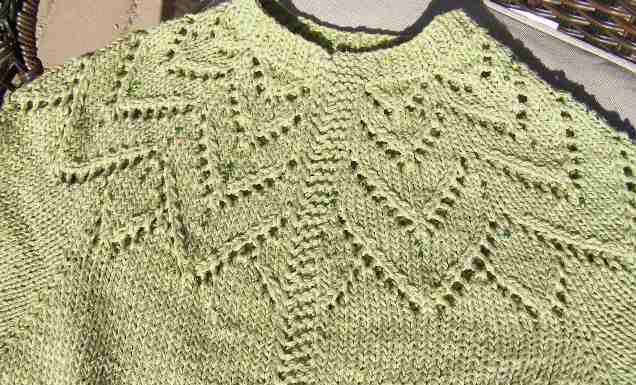
Lace Detail

Lace Detail

Older lace patterns are not charted, they are written in this manner:

Sl 1, k 4, *O, sl 1, k 1, p.s.s.o., k 3, k 2 tog, O, k 1.  Repeat from * to last 4 sts, k 4.

Older patterns also have stains on them.

When the stain looks like an *, and one is attempting to repeat from the stain, the lace pattern will not work.

When that occurs in the first lace pattern row, one does a great deal of unraveling.

After three days and eight unsuccessful and very frustrating attempts to knit according to the stain, I enlarged the directions! It was immediately apparent that the supposed * was a stain and not an *.

Once that issue was resolved, the pattern worked beautifully!

Top-Down Lace Yoke Sweater

Top-Down Lace Yoke Sweater

With that errant * problem solved, the top-down knit sweater was completed during one weekend of football!

I have the pattern in my Stash, but I am told the pattern is available free by contacting:

Consumer Information
Coats & Clark
3430 Toringdon Way, Suite 301
Charlotte, North Carolina 28277

Posted in Knitting | Tagged | 3 Comments

Football and Knitting

Pink Petal Cardigan

Pink Petal Cardigan

Are you ready for some football?

Line up the Unfinished Knitting Projects from the Stash, knitting needles, and a coffee – turn on ESPN and the playoffs and…

I…it is time to knit!

Football and knitting! A great Destashification Weekend!

Sitting and knitting for more than 8 hours a day would normally earn the wrath of a few  – but turn on NFL Prime Time or a game and just tell everyone you are watching the game – and all is good!

Pattern:  A Modified #14 Leaf Yoke Top by Angela Hahn (Knit.1, SS2009)

Pattern: A Modified #14 Leaf Yoke Top by Angela Hahn (Knit.1, SS2009)

The Pink Petal Cardigan is another sweater, also top-down knit, that was completed during a football game! Two other Destashification Sweaters were completed earlier this month.

https://i0.wp.com/store.vogueknitting.com/images/Product/icon/1792.jpgThe original pattern (left) was not a cardigan and did not have sleeves – but in top-down knitting that is not a difficult modification.

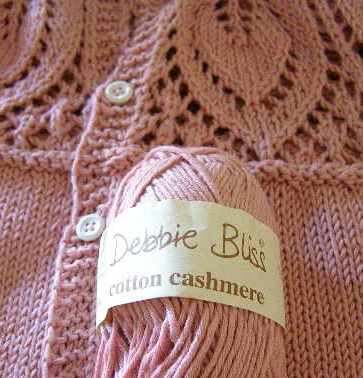
Debbie Bliss Cotton Cashmere from The Stash

Debbie Bliss Cotton Cashmere from The Stash

The yarn was in The Stash, Debbie Bliss Cotton Cashmere in a Ballet Pink.  Cotton Cashmere is very soft.

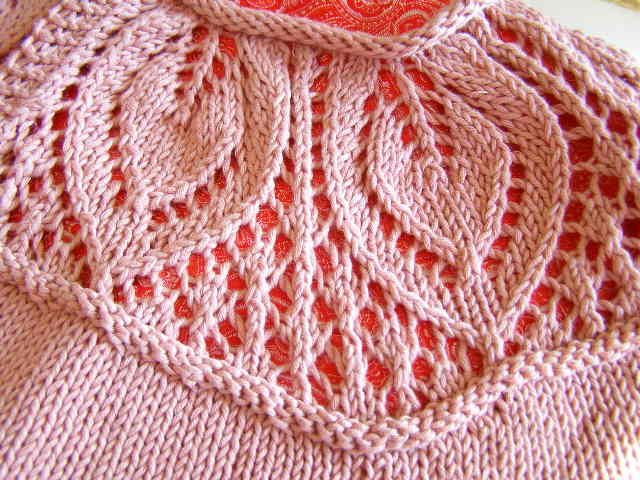
Love the Lace Yoke in this pattern!  So pretty!

Detail of Lace Yoke

Detail of Lace Yoke

The Stash holds a few other yarns that I may knit up in this pattern.

Once the yoke is completed, there is just stockinette stitch – perfect for football game knitting!

Posted in Knitting, Stash Couture | Tagged | 1 Comment

Luscious Yarn = Lovely Sweaters

The Yarn Stash is more tactile than The Fabric Stash.   It contains yarns spun from qiviut, cashmere, silk, merino, linen, bamboo (even some wool and acrylics) and combinations there of.  Yarn just has a feel that is difficult to resist.

After finishing the Five Year Sweater, I was motivated to complete a few of the other partially completed knitting projects in the Yarn Stash.

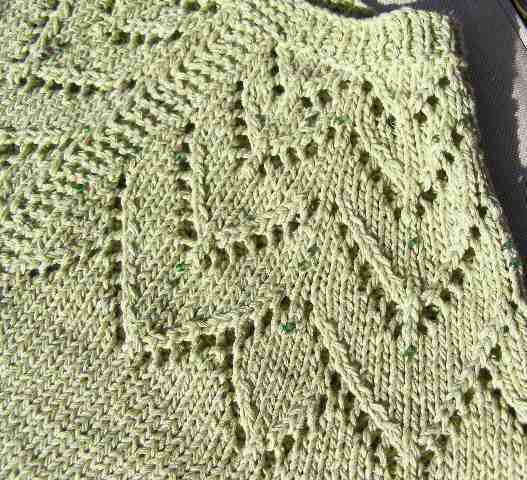
Detail of Linen Cardigan Lace

Detail of Linen Cardigan Lace

Two sweaters were completed before the fleeting knitting motivation abandoned me again!

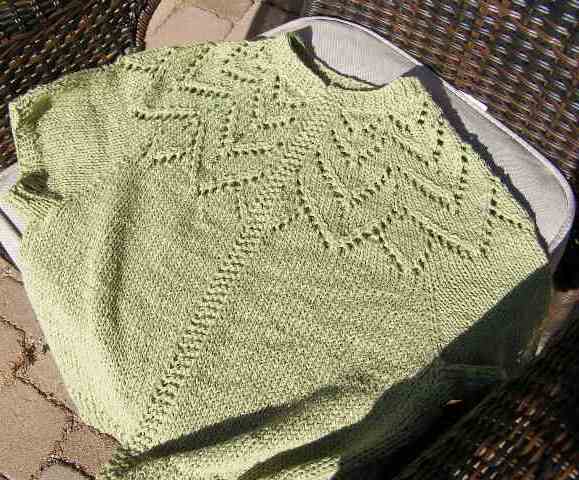
The blue cardigan is knit in a surprisingly soft 100% linen yarn.

It is a basic raglan top-down cardigan with lace added at the front edges.  The pattern is available free. 

Linen Cardigan

Linen Cardigan

Linen and short sleeved, it will be perfect for the Arizona summers – when the AC creates an indoor chill.

Linen yarn is said to “bloom.”   After knitting with it, I realize that “bloom” is just an artistic expression for “shed.” When knitting this, I was so covered in blue lint that I looked like a smurf!

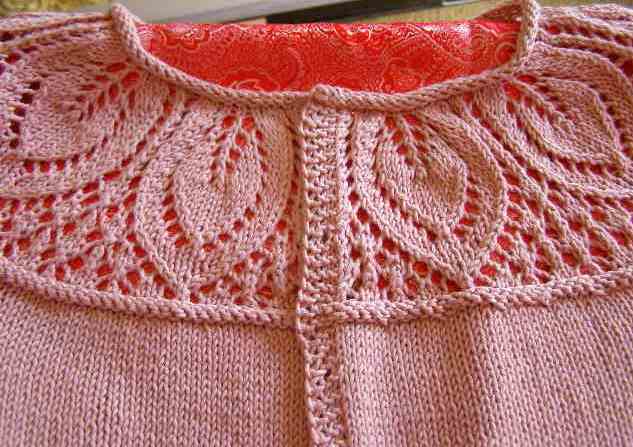
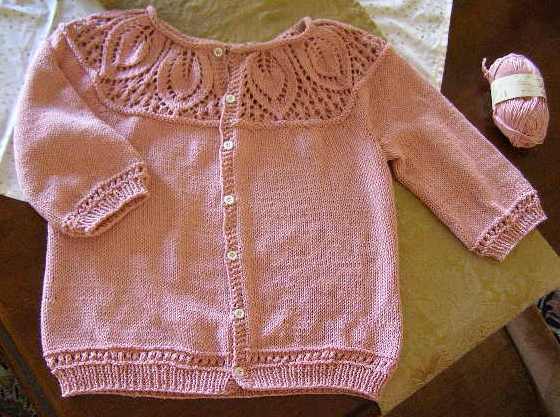
The second cardigan was also top-down, knit with a lace petal design a the neck.

Petal Lace Cardigan

Petal Lace Cardigan

The yarn was a worsted weight bamboo, hand-dyed in colors that were impossible to walk away from – pinks and browns! I believe it was called Copper Rose.

The brown is a coppery rust color, the pink is a muted ruby.  The Stash contains a copper colored linen fabric that will make a perfect skirt to compliment the sweater!

Petal Lace Detail

Petal Lace Detail - Back

Even in Arizona, the winter mornings require a long-sleeved sweater to ward off the chill.

The Stash provided the buttons – a tiny pink bead was added when they were sewn on.

Stash Buttons with pink bead.

Stash Buttons with pink bead.

If the knitting mojo hits again, I may redo the neckline of this cardigan.  In these photos, it is apparent that it distorts the lace design.

Edited on 1/9/12:  Reknit the neckline (4 times).  The first time I followed the pattern and it was huge!  The second time (above) it was too tight.  The third time was just a bit wonky as the decreases caused angles in the neckline.

Corrected and re-corrected neckline.

Corrected and re-corrected neckline.

Finally (said Goldilocks) it was just right (or close enough).

Posted in Knitting, Stash Couture | 2 Comments

Table Runner Tutorial: The Engineering-Only Version

The facts, Ma’am, just the facts.”

Editorializing is fun.

But too much of it in a tutorial can cause confusion.   So to focus solely on providing the instructions for the Destashification Table Runner – this engineering-only version was created…..

  • Cutting Fabrics:

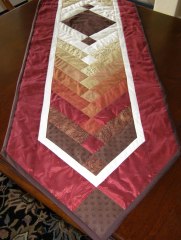
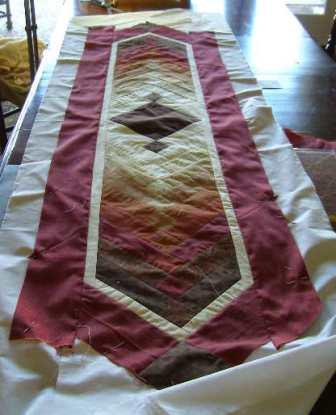
    Destashification Table Runner

    Destashification Table Runner

  1. From 10 different fabrics, cut two 2.5″ squares and four 2.5″ * 8″ strips.
  2. For Edging/Sashing 1 (narrow), cut 1.5″ strips that total approximately 140″ in length
  3. For Edging/Sashing 2 (wider), cut four 5″ * 10″ strips and two 5″ * 60″ strips
  4. For Center Square, cut one 7.5″ square.
  5. For two end squares, cut two 5″ squares
  6. Backing Fabric should be approximately 80″ * 24″
  7. Foundation Fabric (will not be visible) should be approximately 80″ * 24″
  8. Linen or Flannel for batting also approximately 80″ * 24″
  • Also required:  Quilt Binding or extra wide bias binding.
  • Sewing Squares to Strips:
Sew strips to squares

Sew strips to squares

  1. Sew one of the 2.5″ squares of darkest fabric to one of the 2.5″ ends of lightest color fabric strips – right sides together.  Use the edge of your pressure foot to determine seam allowance (1/4″ – 3/8″). Repeat for other darkest square and one of the other lightest strips.
  2. Sew the 2.5″ squares of lightest fabric to the strips of next darkest fabric in the same manner.
  3. Sew squares of each design fabric to the next darker fabric strips.  Each of these are referred to as “strip/square units”
  4. Press all seams open.
  5. There should now be 10 sets of:  2 strips and 2 strips/square units.
  • Prepare Foundation Fabric:  Press centerlines (both horizontal and vertical) of foundation fabric – these will be guidelines for keeping design straight.
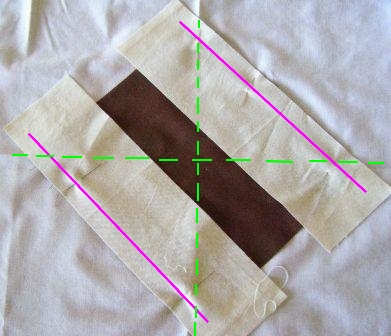
  • Sew along pink lines. Green dotted lines are crease lines in foundation fabric.

    Sew Fabric A strips to Center Square through all layers using pressure foot to determine seam allowance (Pink Lines).  Green Dashed lines represent Foundation Fabric Centerlines.

    Sew Design:

    1. Place 7.5″ square on top of foundation fabric. Match square points to the centerlines that were just pressed into the foundation fabric.  Pin.
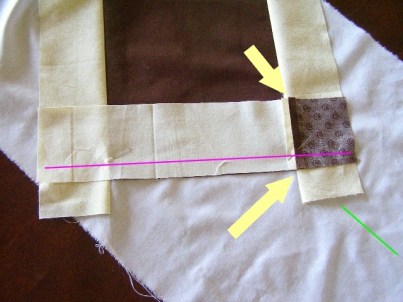
    2. Line up the lightest color fabric strips (those without squares) with two edges of Center Square – right sides together as shown in Photo. Pin.  Sew through all layers (strip, center square and foundation fabric) using  pressure foot to determine seam allowance. Remove pins.  “Flip” strip over so right side is up.  Press flat.
    3. Take one of the first two strip/square units created (lightest color strips sewn to the darkest fabric square) and align it with one of the remaining edges of the center square – right sides together.
      Place Strip A/ Square J as shown, aligning at arrows. Sew through all layers using pressure foot as seam allowance

      Place Strip A/ Square J as shown, aligning at arrows. Sew through all layers using pressure foot as seam allowance

      Match the seams as shown in the photo.  Pin.  Sew through all layers using pressure foot to determine seam allowance.

    4. Repeat Steps 2 and 3 for the remaining side of the Center Square.  Points of the dark fabric squares should align with the foundation fabric centerline.
    5. Repeat Steps 2 – 4 for all design fabric sets.  First sew the strips, flip and press, and then sew the strip/square units.   Strips are sewn in order from lightest color to darkest color.
  • Sew Edgings/Sashing
    1. Sew pieces of Edging/Sashing 1 to last strips and strip/square units as if the Edging 1 pieces were another set of strips and squares.  Trim length. Flip and Press.
    2. Place entire piece on large flat surface.

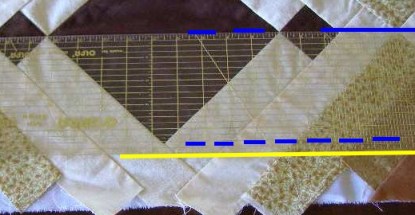
      Draw line 6" from centerline

      Draw line 6″ from centerline (yellow) the lower blue dashed line represents location of the Seam line – and why the pencil line (yellow) will not show.

    3. Draw lines 6″ from the centerline along both long edges of design using a pencil.  These lines will not show when runner is completed – however, it will provide a straight seam guide for attaching the edging/sashing pieces.
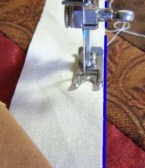
    4. Place outer long edge of Edging/Sashing 1 along one of these lines (right sides together) and sew through all layers using pressure foot as seam allowance guide. Repeat for other edge.

      Align Edge 1 along line and sew using pressure foot to determine seam allowance.

      Align Edging 1 along pencil line (blue line) and sew using pressure foot to determine seam allowance.

    5. Flip Edging/Sashing 1 and Press.
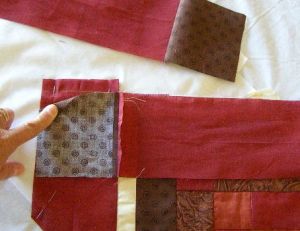
    6. Sew the two 5″ endpoint squares to ends of two of the 5″ *10″ Edging/Sashing 2 pieces as if they were another square/strip unit.  Then sew the Edging 2 strips and squares sets to the short Edging 1 pieces as if they were another set of design strips and squares.
    7. Align two longer Edging 2 pieces with outside of Edging 1 – right sides together.  Sew through all layers using pressure foot to determine seam allowance.

      Sew Edging/Sashing 2 as if it were another strip and strip/square unit.

      Sew Edging/Sashing 2 as if it were another strip and strip/square unit.

    8. Flip Edging 2 and Press.  The piecing of the table runner top is now complete!

Too much?

Too little?

Too confusing?

Please, leave a comment and let me know….(not making editorial comments is a great deal harder than I thought it would be!!!)

  • Piecing Complete!

    Piecing Complete!

Posted in Beginner Sewing Projects, Destashification Braided Table Runner, Home Decor, Quilting, Sewing, Tutorial | Tagged , | 4 Comments

Art in a Science Dissertation

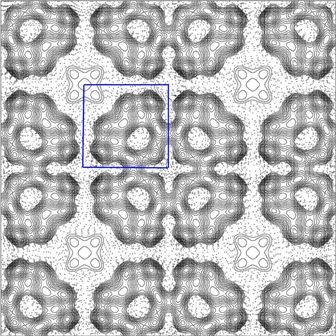
Dissertation Slide - a frequency distribution of a molecule

Photo 1: Dissertation Slide - a frequency distribution of a molecule

Art can be found anywhere.

I was fortunate to be able to attend the son’s Molecular Biology PhD Dissertation Presentation – although I understood very little after he said, “Welcome….”

While he was speaking in polysyllabic terms, I was watching the slides, which included the frequency distribution in Photo 1.

I thought one of the shapes would make a great sofa sized painting in saturated colors – sort of a paint by numbers.

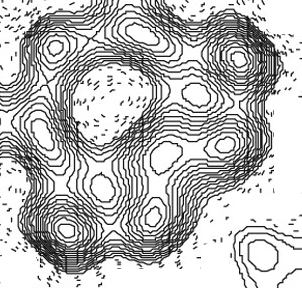
This was referred to as "the smallest repeating unit."

Photo 2: This is referred to as "the smallest repeating unit."

But sending a 4′ by 6′ painting across 2,000 miles was not viable – and he is not a modern art kind of guy (at least, I didn’t think he was.).

The next option was a quilted pillow top, because everyone needs sofa pillows!

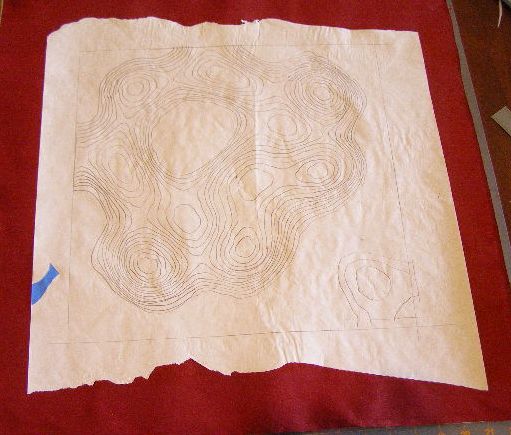
Blew up the “smallest repeating unit” in Photo 2 to a 12″ square and traced it onto freezer paper.

The Stash contained a wine colored silk dupioni that coordinated with his living room.

Cut a 24″ square for the pillow top.  Ironed the freezer paper to one side and Stash provided iron-on batting to the other.

Ironed Freezer Paper to Pillow Top

Photo 4: Ironed Freezer Paper to Pillow Top

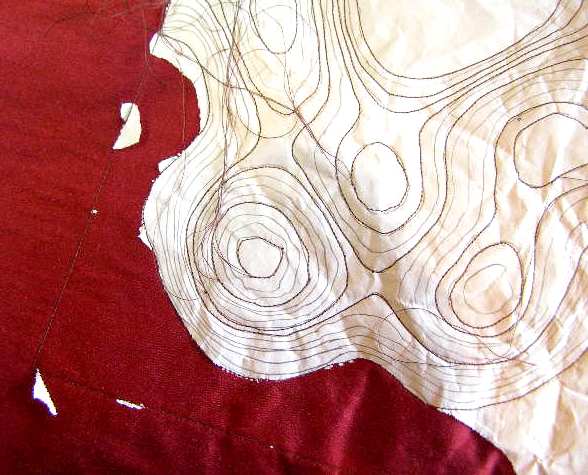
Quilting was accomplished by simply stitching on the lines drawn on the paper.

Removing freezer paper from stitching lines that are only 1/16″ apart was an exercise in tedium.

Sewing every other or every third “contour” and then removing portions of the paper – then filling in with the remaining stitching lines saved my sanity.

Mid-stitching.  Portion of freezer paper removed.  Many threads to knot!

Photo 5: Mid-stitching. Portion of freezer paper removed. Many threads to knot!

Mid-stitching, this was not an attractive project.

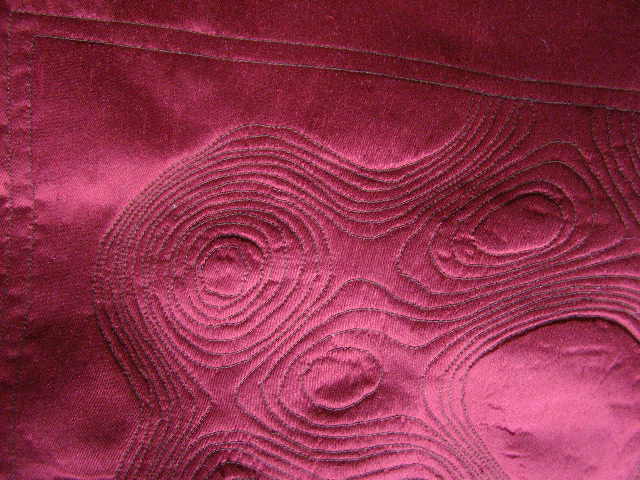
Photo 6:  Detail of Quilting

Photo 6: Detail of Quilting - rather subtle!

Pulling all the treads to the back and knotting also tested by rather limited patience.

Found a zipper in The Stash and finished the pillow with a flanged edge.

In the end the brown quilting thread against the gentle shimmer of the wine dupioni created a very subtle quilted effect.  The “smallest repeating unit” pattern is obvious only to him – as he noted – he looked at it several thousand times! To others, it is simply a couch pillow.

In an odd twist, when he received the completed pillow  – he was very appreciative – but noted the design would make a great wall-sized painting to hang above his sofa!

Posted in Home Decor, Quilting, Sewing, Tutorial | 2 Comments

The Five Year Sweater

The Five Year Sweater

The Five Year Sweater

When winter sets, so does the urge to knit.  Even after moving to Arizona.

My sons, now men, still live in the Northeast and still need warm sweaters (at least in their mother’s opinion).

Five winters ago, I started Jack’s Aran Pullover in Men in Knits by Tara Jon Manning.  It is just looks sooooo comfortable!

About 10″ later,  spring came – and then summer with its 100+ degree temperatures.  Too hot for knitting.

Jack's Aran Pullover

Jack's Aran Pullover

When the temperatures finally cooled off the next winter, a valiant attempted to continue knitting the sweater was made – however,  I could not figure out where I was in the intertwined cable pattern.  So I put it away for another year….OK, two years.

Then The Destashification Project was initiated.  Having 20 balls of Alpaca/Cashmere/Silk/Merino yarn in a bag, in the closet, with a partially completed project, would require destashing!

Knit Picks Panache in Moss - Wonderful to touch!

Knit Picks Panache in Moss - Wonderful to touch!

The yarn is Knit Picks Panache, which is no longer available, but is WONDERFUL!

So I ordered Patons #1232, Inca for Men Booklet from Patons Australia.  It contained a very straightforward Guernsey Sweater pattern that would be able to hibernate through the Arizona summers.

I unraveled down to the ribbing and started knitting whatever number of stitches calculated to 44″ while waiting for the pattern.

Summer of the sweater’s 4th year arrived before the pattern.

The pattern took four months to arrive (Note to self:  If ordering from Down Under, pay the extra $5 for air mail.)

This winter (Year 5), I was determined to finish the sweater!

Guernsey Sweater Yoke Detail

Guernsey Sweater Yoke Detail

After all the stockinette stitch in the body, the yoke detail was fun – but not long enough for me to lose my place!

The “finishing” steps in knitting have always posed a hurdle for me.   So to avoid such foolishness as sewing sleeve seams, I picked up the sleeve stitches at the shoulder and knit in the round towards the cuff.   Knitting sleeves from the shoulder down also helps determine the correct sleeve length when knitting for a son with a 6′ 8″ arm span!

Packaged and insured and mailed off to the son for Christmas.  It kept me warm while knitting – and should keep him warm in the frigid temperatures of the Northeast!

However, the Destashification Continues!  I think I have enough yarn left for a sweater for the size 2 twenty-something daughter.

Posted in Knitting, Stash Couture | 5 Comments

Tutorial: Flanged Pillows with Frustration-Free Zipper

All Variety of Flanged Pillows - Lovely to Look At - Simple to Sew

All Variety of Flanged Pillows - Lovely to Look At - Simple to Sew

Who enjoys sewing in zippers?

Silence…

An occasional cricket chirping….

…..but mostly silence.

Something about zippers frightened an entire generation away from sewing.  However, this “zipper anxiety” is totally unnecessary.

Flanged pillows can be completed in less than 2 hours – complete with a frustration-free zipper!

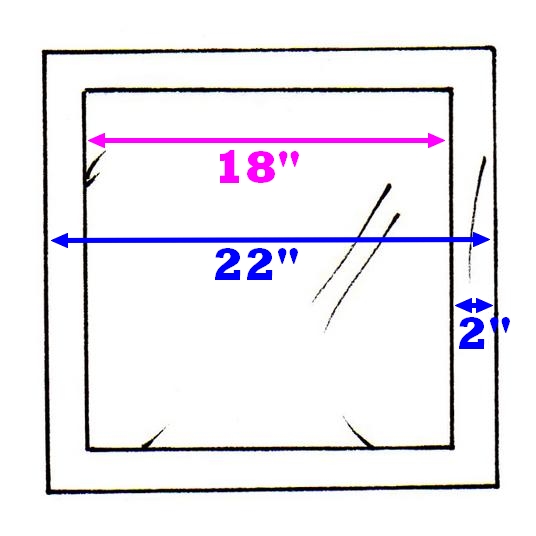
Flanged Pillow with measurements

Flanged Pillow with measurements

This tutorial is for an 18″ pillow form. When finished the pillow will have a 2″ flange all the way around – for a total of a 22″ square.  (See Math notes at bottom of post if using a different pillow size.)

Materials:

  • 28″ of fabric (44″ or wider)
  • One 16″ regular zipper
Pillow Top = ONE 24" square (The pillow back is two rectangles)

1. Pillow Top = one 24" square

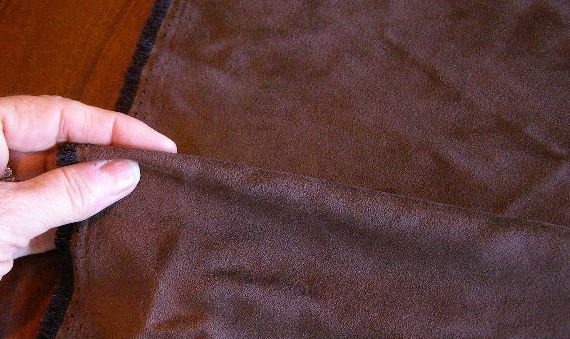
1. Cut the fabric for the pillow back into two rectangles:  one 10″ by 24,” and the other 18″ by 24″.  The Stash provided some not-really-Ultrasuede for the backs of the pillows

2. Cut one 24″ square for the pillow top.  Put aside for later.  My daughter choose an upholstery weight checked fabric for her pillow tops. .

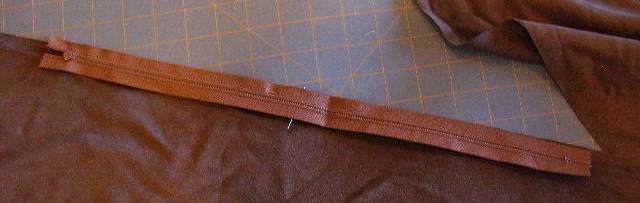
3. Find the middle of the length of the zipper and mark with a pin.  Just folding the zipper in half does this quite easily (and is Math-Free!)

Align mid-point of zipper to mid-point of 24" side of smaller rectangle.

2. Align mid-point of zipper to mid-point of 24" side of smaller rectangle.

4. Find the middle of the 24″ side of the smaller pillow back rectangle and mark with a pin.

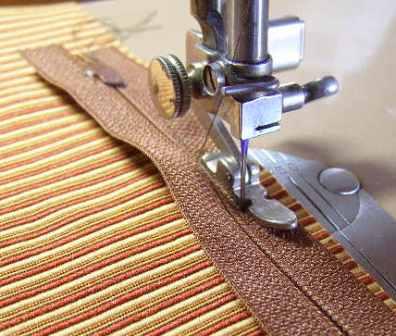
5.  Align the middle of zipper to the middle of the rectangle, right sides together.  The long edge of the zipper should line up with the edge of the fabric.

To avoid "issues" with zipper pull, sew two or three inches with zipper partially opened.

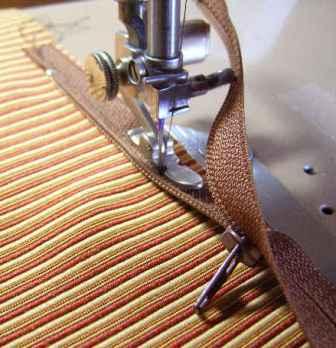
3. To avoid "issues" with zipper pull, sew two or three inches with zipper partially opened.

6.  Using a zipper foot, sew the zipper to the fabric using approximately 1/4″ seam allowance.  The zipper pull will get in the way.  To avoid any problem, start sewing with the zipper partially unzipped.  Sew about two inches ending with needle down, lift the pressure foot, zip the zipper closed, drop the pressure foot, and continue sewing.

Lift pressure foot, close zipper, and continue sewing.

4. Lift pressure foot, close zipper, drop pressure foot, and continue sewing.

Press fabric away from zipper.

Aligning zipper for second seam

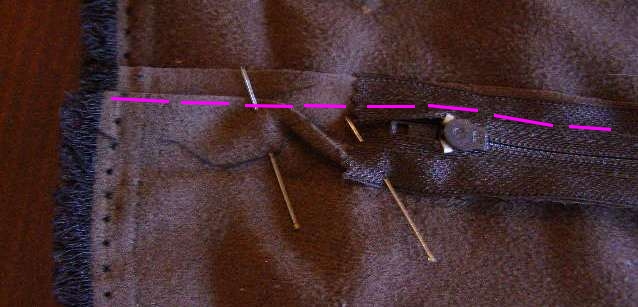
5. Aligning zipper for second seam. Fabric is "flapped" to show underlying zipper (just for illustration, please do not flap fabric when sewing the seam). Seam shown with pink dotted line.

Repeat these steps with the larger rectangle and the unsewn edge of the zipper.  But do not press this seam.
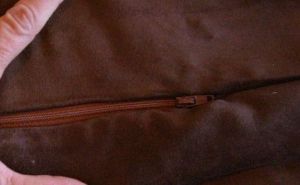
Zipper sewn to both pillow back rectangles.

6. Zipper sewn to both pillow back rectangles.

The zipper will look something like Photo 6.

Take a moment to enjoy your zipper success!  Anxiety and frustration free!

Now for the “placket” – kind of an odd word.  But then again, so is “flange”.

Lay entire piece flat.

Pinch and fold larger rectangle two inches from zipper

7. Pinch and fold larger rectangle two inches from zipper

Pinch edges of larger rectangle approximately 2″ from zipper as shown in Photo 7.

Create a 2″ fold from the pinches and fold it over the zipper.  This will creates the “placket” – or the fold that covers the zipper.

Insert Cardboard and ruler into crease (placket-to-be), then smooth pillow back.

Insert Cardboard and ruler into crease (placket-to-be), then smooth pillow back.

To keep the placket a consistent width, slide a ruler or a piece of cardboard into the crease that was created from the pinch-and-fold.  See Photo 8.  It should be between 1.5″ and 2″ in depth.

Using your hands, smooth the crease and the pillow back with your hand.

"Perfect Depth" Math-Free Measuring Device (perfect for hems as well)

9. "Perfect Depth" Math-Free Measuring Device (perfect for hems as well)

NON-Math Method:  Cut a little triangle into the piece of cardboard to define the depth of the crease (placket) as shown in Photo 9. Then use it to make sure the depth is consistent across the entire pillow back.  If fractions are preferred – use the ruler instead.

Important:  Take care not to pull the crease with too much effort – the zipper must remain flat Too much effort may pull it over on its side.

Once the depth is consistent, pin the crease (placket) closed at the edges and every 4″ or so.  Press with iron.

Ovelap seam allowances at edges.

10. Ovelap seam allowances past end of zipper. The pink dotted line illustrates where the placket seam will be.

Turn the entire piece over so the wrong side is up.  Note that the zipper does not extend all the way to the edge of the fabric square. Overlap the fabric in the non-zipper sections and pin  – as best as can be done without “deforming” the pillow backs.  There will be small sections that do not quite overlap – that is just fine!  None of this will show.  Everything will be covered by the placket!

Now to define where the placket seam will be – and ensure it is a nice straight seam:

Poke pins through pillow back at the zipper seam line of larger rectangle.

11. Poke pins (hard to see, but are at ends of pink arrows) through pillow back at the zipper seam line of larger rectangle.

Poke pins through the pillow back at the larger rectangle zipper seam.  The pins need to be visible on the right side.  Just three or four pins are all that is needed.

Turn piece over.

Lay a piece of tape along pins to define placket seam line.

12. Lay a piece of tape along pins to define placket seam line.

The pins that are poking through define the stitching line.  Lay a piece of tape (I use painter’s tape) along the pins to create a straight edge for sewing.

Tape should be a consistent distance from placket crease.

13. Tape should be a consistent distance from placket crease.

I do measure the tape to ensure it is the same distance from the placket crease for the entire width.  It should be approximately 2″ (approximately!)

Sew along edge of tape to create an even, straight placket seam.

14. Sew along edge of tape to create an even, straight placket seam.

Sew along the tape edge as shown in Photo 14.  This seam creates a wide flange to hide the zipper.

That little zipper pull may get in the way again.  If so, sew to within a few inches of it, unzip it and then continue sewing.

Remove the tape.

Completed Placket! Completed Zipper!

15. Completed Placket! Completed Zipper!

For added stability, sew back and forth along the overlapped edges.

The Frustration Free Zipper is complete!  (Do a little victory dance!)

Common problem – no worries:  If the overlapped sections at the ends of the zipper (Photo 10) were not sewn in place by the Placket Seam, just tack them down with a few hand stitches.  They will be secured by the Flange Seam before the pillow is complete.

Place the pillow back flat – right side up.  Lay the pillow top on top of  it – right side down (right sides together).  Pin corners and edges.

IMPORTANT: Prior to sewing final seam, the zipper must be unzipped a few inches.

16. IMPORTANT: Prior to sewing final seam, the zipper must be unzipped a few inches.

IMPORTANT:  Carefully reach through one pinned side and unzip the zipper about 6″ – other wise, turning the finished pillow right side out will present challenges.

Sew pillow top and back together on all edges.

17. Sew pillow top and back together 1" from edges.

Sew all the way around, 1″ from edges as shown in Photo 17.
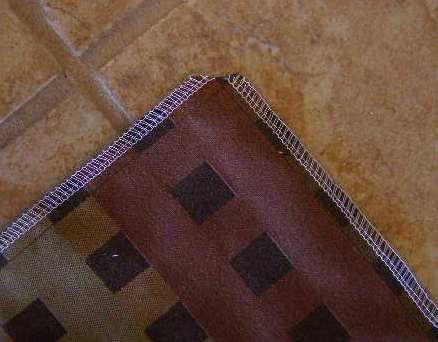
Serged edges and corners trimmed diagonally.

18. Serged edges (optional) and corners trimmed diagonally.

Trim edges to about 1/2″.  I serged the edges, but it is not required.  Trim the corners diagonally across as shown in Photo 18.

Turn pillow right side out through the unzipped portion of the zipper.

Lay pillow top down on ironing board.  Use large pin to pull seam while ironing to create flat edge.

19. Lay pillow top down on ironing board. Use large pin to pull seam while ironing to create flat edge.

Lay the pillow top side down on ironing board.  Using a strong pin (a large safety pin works well) pull the seam and iron flat.  This creates a nice flat edge, but it does take a while.

Zip the pillow closed.

Pin and sew 2" from edge all the way around pillow to create flange.

Pin and sew 2" from edge all the way around pillow to create flange.


Pin all the way around the pillow approximately 2″ from edges. Smooth any “fluff” toward the middle of the pillow.

Stitch around pillow 2″ from edge to create that flange! Unzip and fill with an 18″ pillow form!
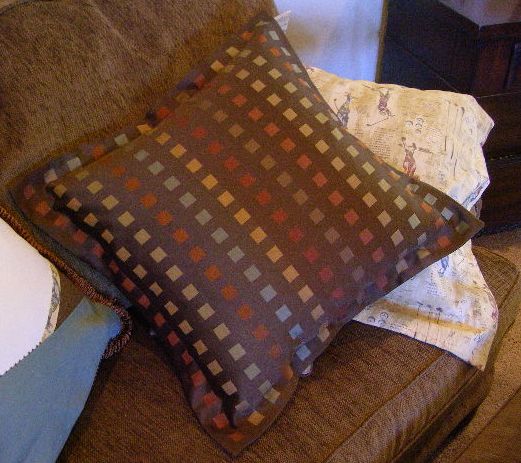
Completed Flanged Pillow

Completed Flanged Pillow

Pillow is complete!

(Do the victory dance again!)

Math for other pillow and flange sizes.

For pillows with a 2″ flange – add 4″ to pillow form width for pillow top size.

For pillows with a 3″ flange – add 6″ to pillow form width for pillow top size


Posted in Beginner Sewing Projects, Home Decor, Sewing, Stash Couture, Tutorial | 12 Comments