Manhattan Bound Ingenue Cardigan

Football season has started – time for knitting projects.

Wendy Bernard Ingenue

Wendy Bernard Ingenue

I have always wanted to knit the Wendy Bernard Ingenue sweater (LOVE top down knitting!), but wanted a cardigan rather than a pullover.  The upcoming trip to Manhattan  seemed to be a good reason to try it.

Collinettte Skye in Cream Tea

Collinette Skye in Cream Tea

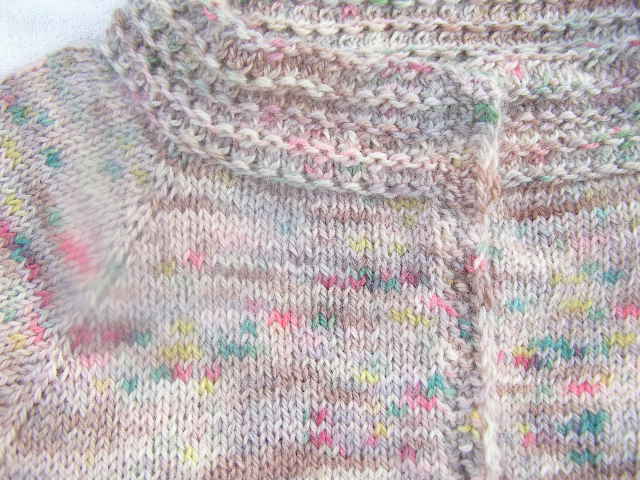
The Yarn Stash contained a hand painted worsted/aran weight wool by Collinette called Skye.  The colorway is called Cream Tea.  It varies between cream and a light mushroom brown with short (3 inches or less) lengths of pink, yellow and greens.

After visiting the Ravelry reviews for this sweater, I started with a provisional cast-on at the neckline. Used needles one size larger than that specified by the pattern (did not want an overly dense sweater) and knit the smallest size sweater to accommodate the gauge difference.

The collar was knit last – using two different needle sizes to prevent forming gathers.

Trying on Dark Buttons

Trying on Dark Buttons

..and Light Buttons

..and Light Buttons

When completed, the Button Stash was visited and light and dark buttons compared.

The dark color worked much better – but The Button Stash did not have more than two of any that worked.

So, buttons had to be purchased.  Really?  $2.25 each?  For a disk of plastic smaller than a quarter?  Really?

Completed Ingenue Cardigan

Completed Ingenue Cardigan

The yarn softened quite a bit during blocking.  I love the end result!


Posted in Knitting, Stash Couture | Tagged | 1 Comment

I Saved $210! The Destashification Overnighter

Smithsonian Overnight Bag $225

Smithsonian Overnight Bag $225

I love these overnight bags.  They are $225 at the Smithsonian Store.

Smithsonian Boho Overnight Bag - also $225

Smithsonian Boho Overnight Bag – also $225

I think if I added up the cost of all the items I might put in an overnight bag, the total would still fall far short of $225!

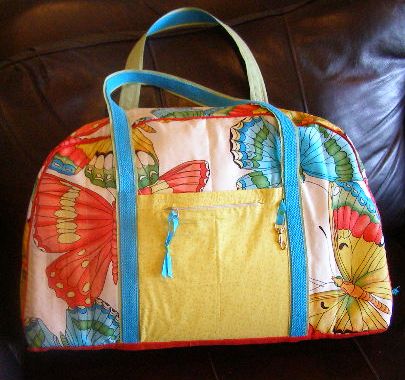
Destashification Overnighter - $15

Destashification Overnighter – $15

But, with the overflowing Stash, I decided to make an overnight bag (for considerably less capitol investment!)

The Smithsonian bags are sewn from tapestry and faux fur.  It is not that The Stash doesn’t contain those fabrics – it does – but I wanted a more colorful fabric.

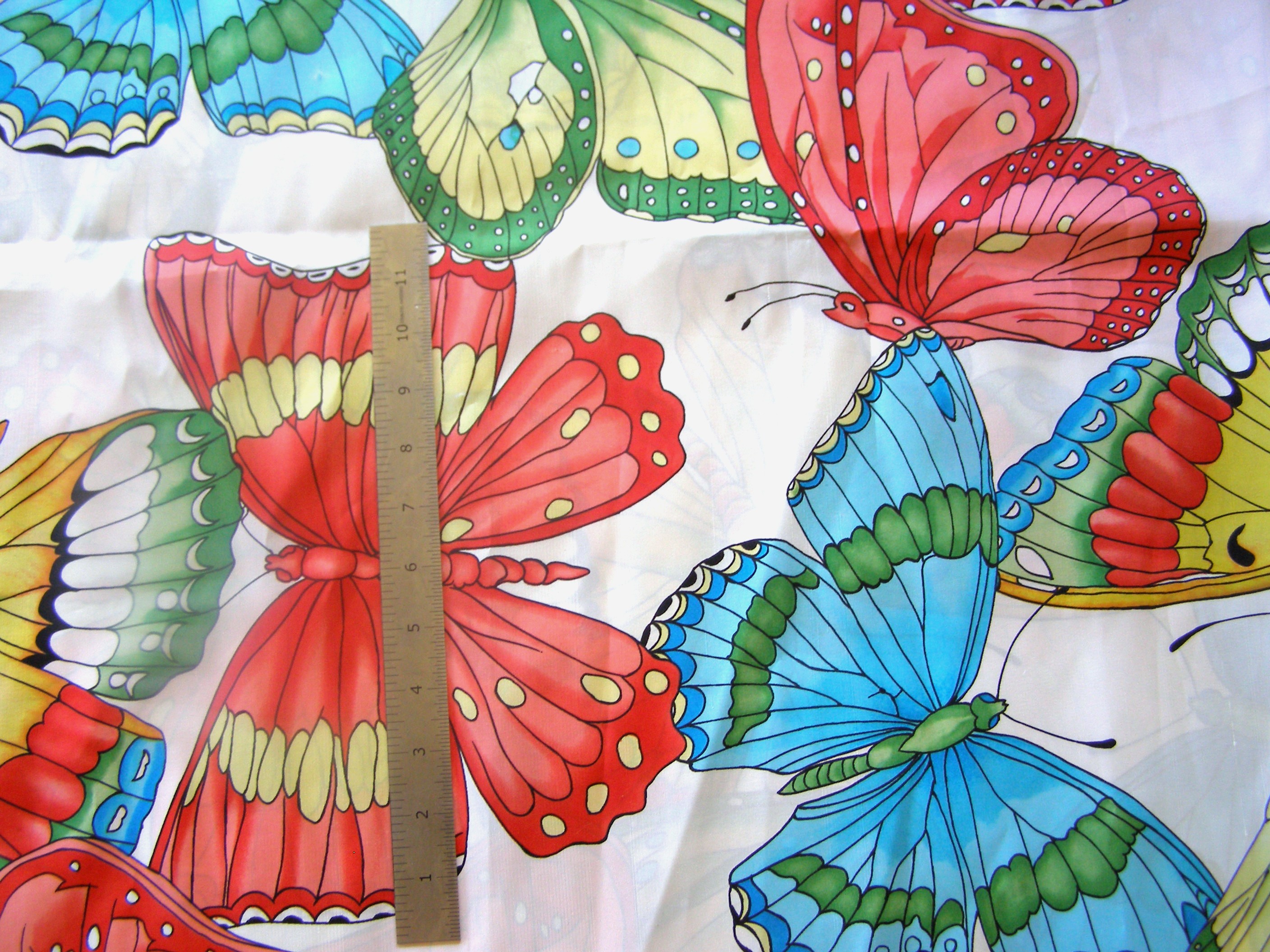
Silk Fabric

Silk Fabric

The Stash contained a beautiful large butterfly print – it is silk and only 30″ wide!  Silk with a white background is not a great choice for luggage – so some red ultra-suede-esque fabric was used for the base.

The Stash includes some very long upholstery zippers (still bearing the 50 cent clearance price tag) and some green twill tape, but I purchased some heavier blue nylon strapping to layer with the green for the handles.

The bag dimensions are larger than the Smithsonian’s.  I cut the bag to be maximum size allowed for carry-on luggage.

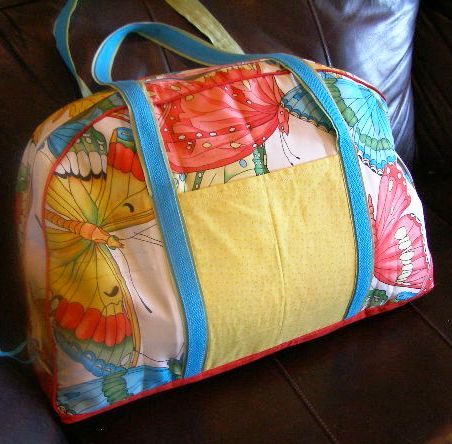
Destashification Overnighter - $15

Destashification Overnighter – $15

The finished bag is so colorful – and lightweight!

As with most things sewing, the initial attempt required revision.  I did not think I had any batting, so I tried Trimtex.

On a smaller bag, the Trimtex might work, but at this size, the stiffness of the Trimtex prevented the bag from fitting in the sewing machine!

Batting was found (in the den – right where I “stored” it) and the bag remade.  The Trimtex was re-used to stiffen the base.

The Smithsonian bags have a waterproof lining.  The Destashification version is also fully lined – with Stash fabrics.

The Destashification Overnighter also has two large outside pockets.  One is a double pocket with a zipper on the outside.

The Smithsonian bags have a double-ended but short zipper – the bags just unzip at the top.  The Destashification Bag has a 50+ inch zipper that extends from the base to base!  This allows the bag to open much like a suitcase!

Double Outside Pockets

Double Outside Pockets

Colorful!  Easy access to all things packed!  Carry-on size!  Wear resistant base!  And all for less than $15!

Now if I can just find something to spend that $210 on!!!!!

Posted in Accessories, Purses, Sewing, Stash Couture | 11 Comments

Season Spanning Stash Couture

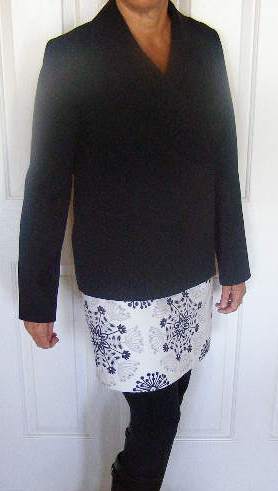
Needed something to wear for the Manhattan trip scheduled for next week!

In Manhattan, autumn has arrived.  In Arizona, at 100+ degrees, it is still summer!

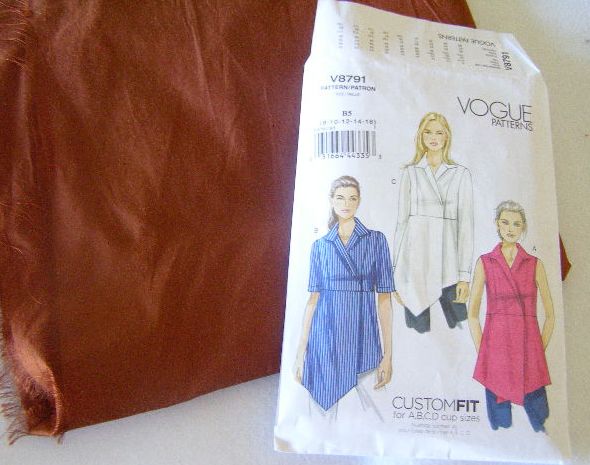
Vogue pattern and silk dupioni

Vogue pattern and silk dupioni

What to wear in both places?  Season Spanning Stash Couture!

The Pattern Stash included Vogue 8791.  View A is a sleeveless tunic.  Sleeveless is a necessity in the Arizona heat – and can be covered with a jacket in NYC.

The Fabric Stash included some beautiful rust linen – which was too Arizona.  But it also contained a similar color of silk dupioni!  Love it!

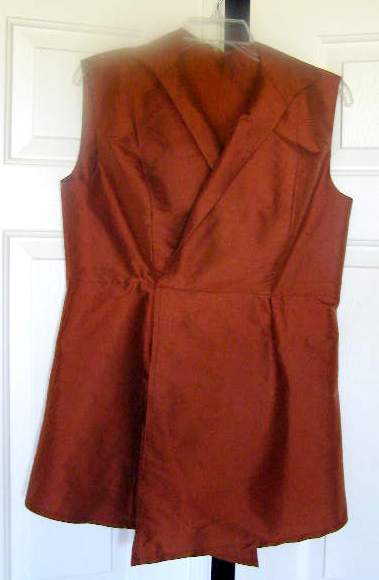
Silk Tunic

Silk Tunic

A quick visit to PatternReview.com to check how the pattern fit others determined that a muslin would be required.  A muslin, a few adjustments, and the 100% Destashification Tunic was completed (even thread came from the stash).

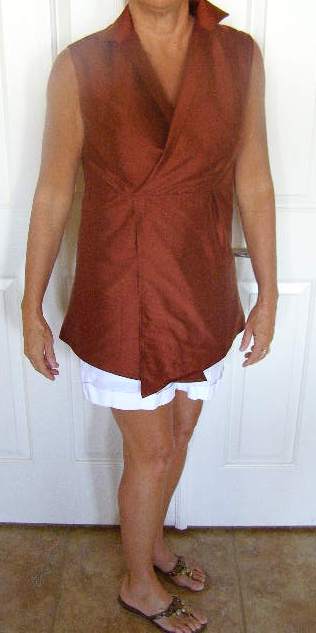
Silk Tunic - Arizona Style

Silk Tunic – Arizona Style

When in Arizona, the tunic works with white linen shorts.

Silk Tunic - NYC version

Silk Tunic – NYC version

In the Northeast, it can be combined with leggings, a jacket and a scarf to ward off the chill.  There may have to be a shoe or boot purchase, though.  Arizona sandals will not suffice as footwear in cooler climes.

New Look and home dec fabric

New Look and home dec fabric

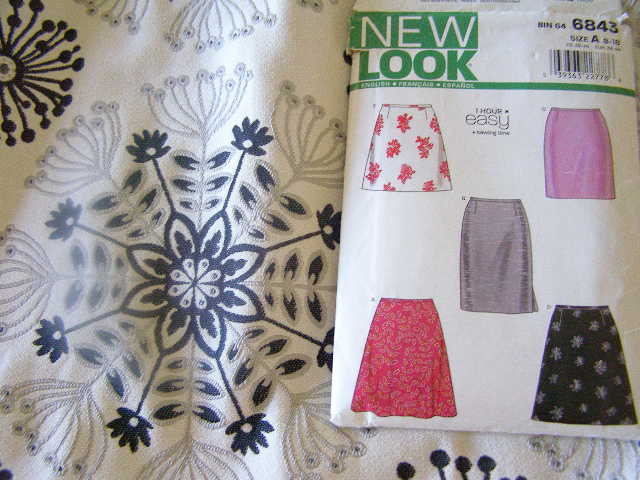
A NYC dinner will require a skirt outfit.  A remnant of upholstery fabric (yep, upholstery fabric) seemed perfect for a skirt.  The Pattern Stash offered New Look 6843.

Skirt muslins do not happen.

To get a custom fit, I cut the fabric to the largest size in the pattern.   Then stitched the darts and sewed an invisible zipper  in the back seam.  The side seams were machine basted.

Straight Skirt - Custom Fit

Straight Skirt – Custom Fit.  Love the Fabric!

I put the skirt on INSIDE-OUT and pinned down the side seams to fit.  (It looked like I was wearing elephant ears!)  After machine basting along the pinned seam  – I put it on INSIDE-OUT again.  A few final minor adjustments and then the side seam were stitched for a simple Perfect Fit!

Skirt for NYC dinner

Skirt for NYC dinner

Traveling light means the same jacket and leggings will be worn with the skirt in Manhattan.  A grey top will complete the outfit (I wonder if there is any grey in The Stash!).

Arizona skirt outfit

Arizona skirt outfit

The skirt can be combined with a “be-dazzled” top for an Arizona dinner date.

Season Spanning Stash Couture!


Posted in Sewing, Stash Couture | 5 Comments

Not Just Another Shapeless Team Mom T-shirt

Having a son or daughter on a team or activity usually guarantees one thing – a T-shirt for Mom.

Mom T-shirt before

Mom T-shirt before

Moms love showing support for the team – but might not  love with always being seen in a shapeless boxy T-shirt.

Mom T-shirt after (logo is now on the back)

Mom T-shirt after (logo is now on the back)

Have sewing machine – will add shape!

I used to rely on a self-drafted pattern for this, but this time I used McCalls 6120.

McCalls 6210 - stashed twice!

McCalls 6210 – stashed twice!

Apparently, this pattern caught my eye on more than one shopping trip – the Pattern Stash contained two of the same pattern!

This transformation usually requires a T-shirt at least 2- 3 sizes larger than the desired finished size.  After a few years I learned – just order the largest size available!

This year I ordered a 2XL.  The only real challenge of transforming the T-shirt is making sure all pattern pieces fit.   There is a lot of fabric in a 2XL!   But even with all that fabric, some “finesse” is required, especially for the sleeves.

Cut off the sleeves.

Cut off the sleeves.

First cut the sleeves off the body of the T-shirt – as close to the sleeve seam as possible.

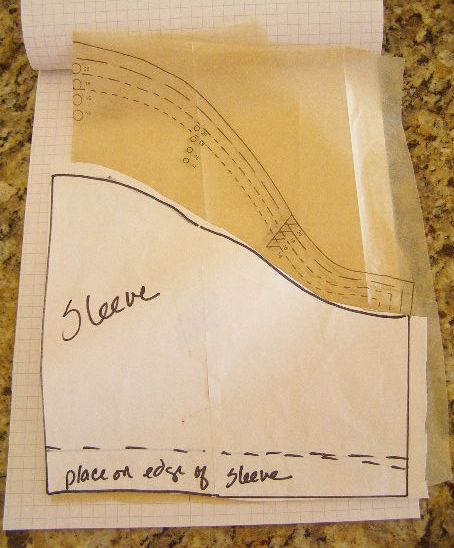
Self-drafted sleeve v. McCalls 6120 sleeve

Self-drafted sleeve v. McCalls 6120 sleeve

The sleeve pattern will not fit as the pattern sleeve “head” is too high.

In the photo to the right, the sleeve head of the self-drafted pattern is much lower than that of the McCalls pattern.  Because of the stretch of the knit T-shirt fabric, a lower sleeve head is fine.

The McCalls pattern has long sleeves, cutting straight across at a 3″ sleeve length creates a nice short sleeve.

Cutting sleeve head as high as possible

Cutting sleeve head as high as possible

Line up bottom of sleeve pattern with hemmed edge of sleeve and create a sleeve head as high as allowed by the length of the T-shirt sleeve.

As shown in the photo to the left, the 2XL sleeve was large enough for the sleeve head to be cut higher than the self-drafted pattern, but not as high as the McCalls pattern.

And…because the bottom of the sleeve lines up with the hemmed edge of the T-shirt sleeve – no sleeve hemming will be required!

Cut shoulder seams

Cut shoulder seams

Now cut the shoulder seams of the T-shirt – again, as close to the seam as possible.  Just the shoulder seams, nothing below the arms yet.

Carefully find the midpoint of the logo and fold the T-shirt vertically along that line.

Place pattern back along logo midpoint fold

Place pattern back along logo midpoint fold

Place pattern piece for back along that line.

The pattern piece has a middle back seam – which will not be cut or sewn.  If it helps, mark 5/8″ from upper and lower edge and connect with a line.  Align that connecting line with the t-shirt fold. Ignore curve of back seam.  Darts may be added to create shape if desired.

DO NOT CUT middle back seam.  Cut out top, bottom and sides of back.

Back all cut out - with centered logo.

Back all cut out – with centered logo.

When cut, the back will have a centered logo.

Carefully cut off the neckband from the remaining original T-shirt.  Fold the T-shirt in half vertically and mark this fold with pins.

Laying out front pieces. Note pins marking centerline.

Laying out front pieces. Note pins marking centerline. From top to bottom: Lower bodice (cut on fold), upper bodice (must cut 2) and band (cut on fold).

Then open and place remaining pattern pieces until they fit.

Double check (and triple check) to make sure all remaining pattern pieces (the band, the lower front and the two upper fronts) will all fit.

Then check again.

The pattern also requires a second band – but as the second band will not be seen and even a size 2XL has limits, cutting the second band from some other knit fabric works just fine.

Mom T-shirt - after: back view.

Mom T-shirt – after: back view.

Once these pieces are all cut out, the top can be sewn together following pattern instructions, except there is no middle back seam and no sleeve hem is required.

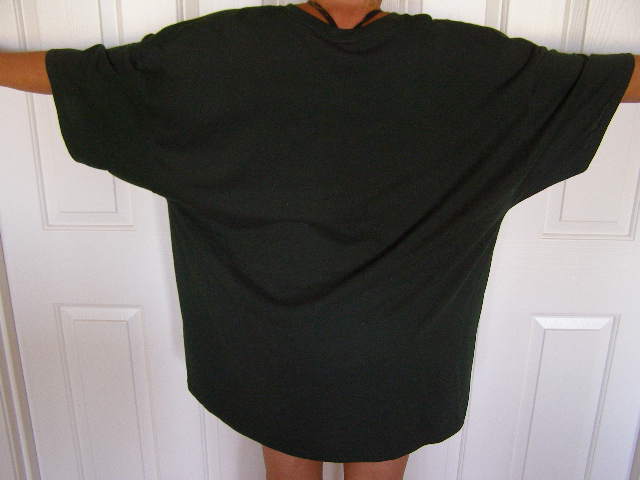
Mom T-shirt before:  back view

Mom T-shirt before: back view

Back waist darts can be added for more shaping.


Posted in Repurpose, Sewing, T-shirt remake, Tutorial | Tagged , , | 6 Comments

Grandpa’s Ties Quilt

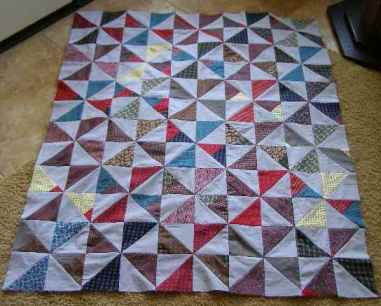
Pinwheel Quilt Top from Grandpa's Ties

Pinwheel Quilt Top from Grandpa’s Ties

Ties from Grandpa. Beautiful silk neckties.

Wonderful tactile silks with intricate designs.

Much time was spent deciding just what quilt pattern would highlight the fabrics from these beautiful ties and pay homage to the man they belonged to.

Pinwheel was the pattern of choice, and after two size-related false starts, 4″ squares seemed to work just right!

This quilt pattern uses Half-Square triangles (HST) and foundation piecing methods.

Needed to make the quilt top

Needed to make the quilt top

To make a quilt like this, one will need:

  • ties (16 or so)
  • rotary cutting “stuff”
  • fine point ink pen or thin lead pencil
  • foundation fabric (Stash ivory batiste)
  • background fabric (I used light grey oxford cloth – reminded me of the shirts he wore the ties with)
  • a 4″ square (clear plastic commercial quilt tool with diagonal line)

Although not immediately apparent, ties are constructed of quite a bit of fabric.  They are typically cut on the bias.

The inner workings of a tie

The inner workings of a necktie

Open the ties by snipping the inside threads.  There will be some “thickener” fabric inside.  That and any labels may be removed (and discarded).

The points of the ties are typically faced.  I discovered that they are typically sewn with a chain stitch.  Pull from the right end and the stitching will undo itself!  (Of course, it took more than a few tries to figure out which is the “right” end!)  Other seams in the length of the tie also seem to be chain stitched and were easily undone.
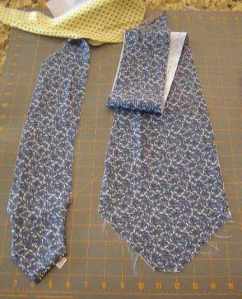
Tie fabric ready to be cut

Tie fabric ready to be cut

Lay tie flat and iron….and then iron again.  Those folds are fairly well established.

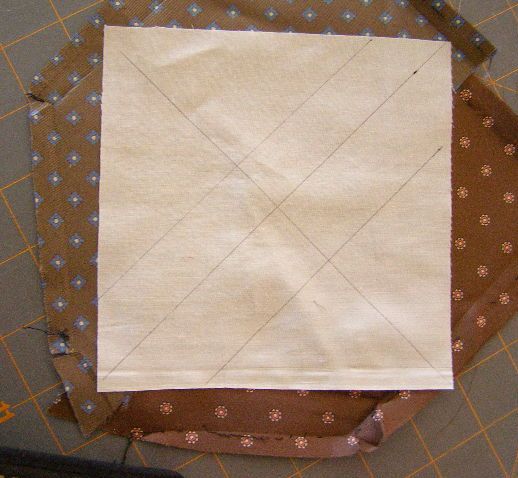
Cut foundation fabric into 5.5″ squares.  This fabric will be marked for the HST seams:  Using the pen (or pencil) draw a diagonal (from corner to opposite corner) line across the foundation fabric.  Then draw two more line 1/4″ on either side of that line.  The latter two lines are stitching lines, the first line is a cutting line.
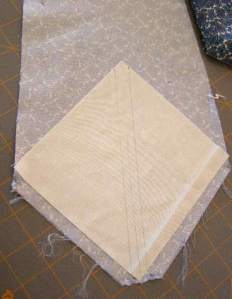
Foundation square on top of tie fabric

Foundation square on top of tie fabric – three diagonal lines are visible.

Lay the tie fabric right side down on the rotary cutting board and lay the foundation fabric square on top of the tie fabric – line side up.  Pin in several locations.

Tie fabric cut to approximate size of foundation fabric

Tie fabric cut to approximate size of foundation fabric

Cut the tie fabric the approximate size of the the foundation fabric (there will be much trimming later).

Cut a 6″ square of the background fabric.  Lay the tie/foundation fabric combination, line side up, on top of the background fabric square .  Pin through all layers.

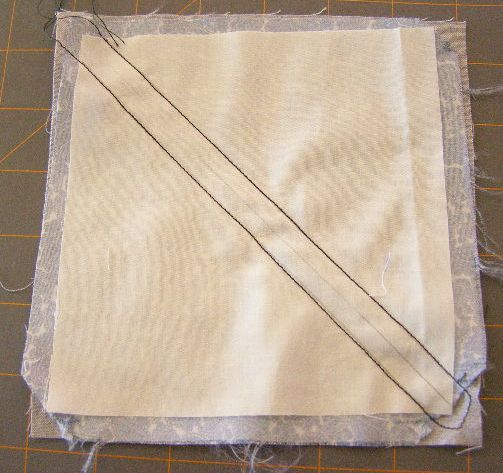
Sewing through all layers along stiching lines

Sewing through all layers along stitching lines

Move to sewing machine and sew through all layers along the sewing lines.

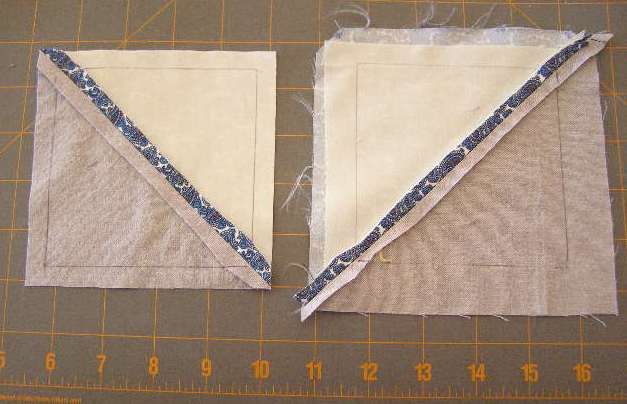
Cut along cutting line

Cut along cutting line

Cut down the middle between the stitching lines along the cutting line.

Open triangles to see squares!

Open triangles to see squares!

Open triangles and press seam open.  These are often referred to as HST squares or HST units.
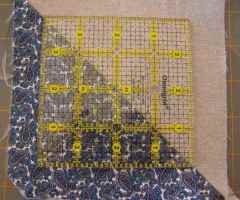
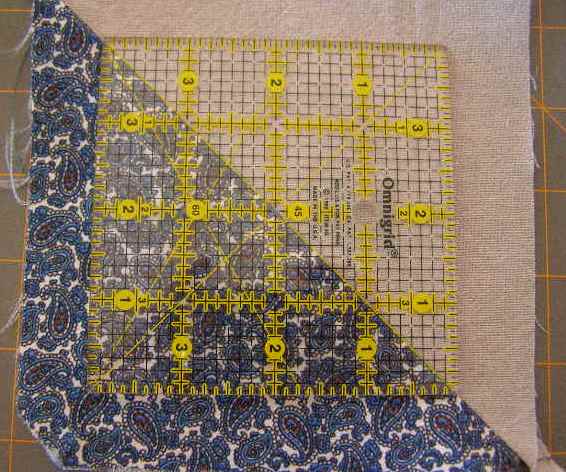
Seams pressed open and 4" square diagonal line aligned with seam

Seams pressed open and 4″ square diagonal line aligned with seam

Voila!  The first (of many) Pinwheel sets is complete.

Turn squares over to wrong side.  Place the 4″ square on top, aligning the diagonal line with the seamline.

4" square drawn on back and unit trimmed to 3/8" seam allowance

4″ square drawn on back and unit trimmed to 3/8″ seam allowance

Using pen or pencil, draw the square onto the back of the fabric.  (I can hear my mother now – “Drawing on fabric! Just unheard of!”

I realize it is a bit non-traditional, but it helps keep corners and seamlines straight!)  Trim each square to 3/8″ from the lines.  (Yes, Mom, I know everyone else uses 1/4″, but the extra width in the seam allowance helps prevent stretching – besides you told me not to do something just because everyone else does!)

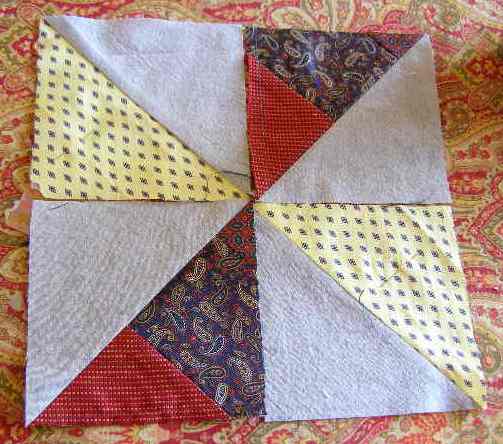
One Pinwheel block requires two sets of HST squares.

One Pinwheel Block requires two sets of HST squares. Lay out squares to ensure they are sewn together correctly.

Each Pinwheel Block requires two sets of HST squares.

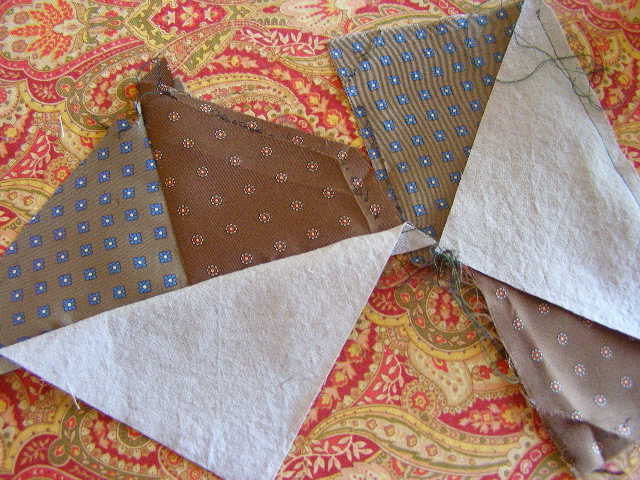
Ties may contain considerable fabric, but it is often too narrow to cut additional whole squares.  To incorporate the narrow pieces of fabric (which means fewer ties are required to make the quilt), foundation piecing is used to create pieced pinwheel sets. In the photo to the right, the red and blue HST are pieced.

oundation Fabric square marked with HST cutting line and diagonal lines for piecing

Foundation Fabric square marked with HST cutting line and diagonal lines for piecing

Cut a 5.5″ square from the foundation fabric.  Draw diagonal lines as for the first pinwheel set.  Then using the perpendicular marked line on the rotary ruler (90 degree line), draw a few perpendicular lines as guides for the piecing sewing lines.

Foundation Pieced square prior to trimming

Foundation Pieced square prior to trimming – small piece of foundation fabric visible in upper right corner.

Using the perpendicular lines as guides for seaming, foundation piece the square.

Pieced HST set.

Pieced HST set.

Once pieced, the HST is created following the same process used for the whole square set – even drawing the square on the back (and trimming to 3/8″!)

Lay out HSTs to ensure they are sewn together correctly.

Those squares drawn on the back of the units are very useful when combining them into the Pinwheel Block.

Poke pin straight down through both corners.  Then pin next to it.

Poke pin straight down through both corners to align. Then pin next to it.

Poking a pin straight down through the corners in both pieces will ensure the corners line up when seamed (although hard to see in the photo – the vertical pin is there!)

Seam squares together by sewing along line

Seam squares together by sewing along line

Seam two squares together by sewing along the line to form rectangles, press seams open.
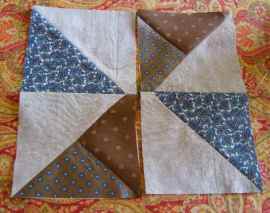
Two rectangles ready to be sewn together

Two rectangles ready to be sewn together

Then sew the two rectangles together.  Again poking a pin straight down through corners will help align those points!

One Pinwheel Block completed!

One Pinwheel Block completed!

And easy at that, the first Pinwheel Block is completed!

Only 41 more to go!
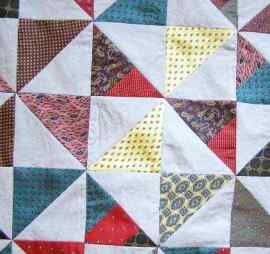
Pinwheel Block detail

Pinwheel Block detail

Each Pinwheel Block in this quilt combines one “whole” square set and one pieced square set.

More detail

More detail

As best I can tell, no two pieced sets are the same.

Off to the Long Arm Quilter!

Posted in Beginner Sewing Projects, Home Decor, Modern, Pinwheel, Quilting, Repurpose, Sewing, Tutorial | Tagged , , , | 6 Comments

Stash Couture Watchband

Time caught up with the watchband!

Time caught up with the watchband!

My watchband served me well.  But time eventually catches up with even the best watchband.

After 3 years, it was frayed beyond repair, but the clasp still worked well.

So, time for a replacement.

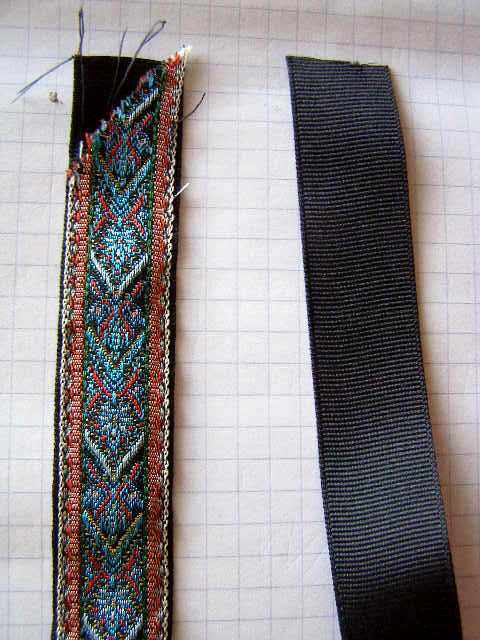
Stash ribbons used to create band.

Stash ribbons used to create band.

The Stash includes beautiful ribbons, including a 11″ piece of the jacquard shown to the left.

To add strength and protect the back of the jacquard ribbon, black grosgrain ribbon was sewn to the back.

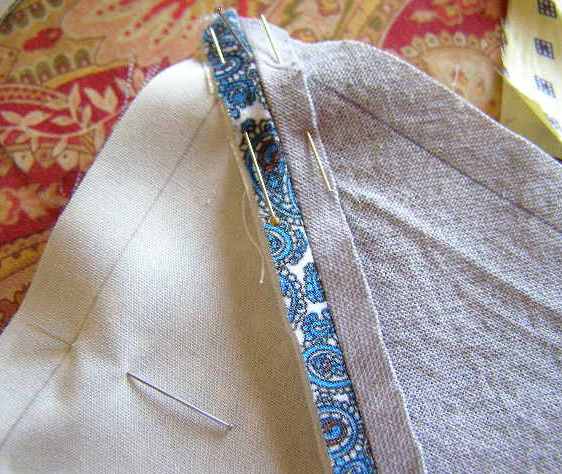
To increase comfort, narrow elastic (also from The Stash), was threaded between the two ribbons.

Edges turned under and tacked down.

Edges turned under and tacked down.

Ends were turned under.

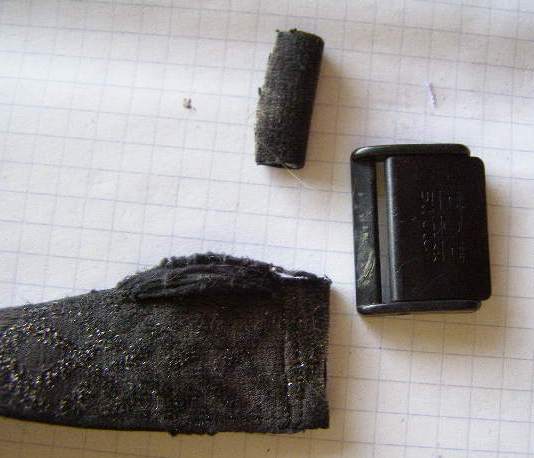
Reusing Original Band Clasp

Reusing Original Band Clasp

The original band clasp was salvaged (and cleaned) for reuse.

Clasp end completed.

Clasp end completed.

The strap was looped through the clasp and stitched down.  The other end folded under a second time and stitched down.

And in less than 20 minutes – a new Stash Couture watchband!

Stash Couture Watchband!

Stash Couture Watchband!


Posted in Accessories, Sewing, Stash Couture | Tagged , , | 2 Comments

Update on the Postage Stamp Quilt

I first posted about the Postage Stamp Quilt in March 2011- knowing it would be a VERY long term project.  It is a hand stitched quilt top of 1″ squares.

After spending some time (OK, too much time) reviewing Postage Stamp Quilts on the web, the initial design has been revised.

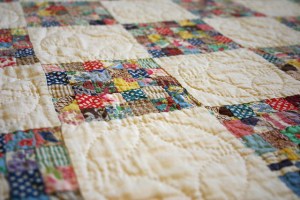
Postage Stamp Quilt by Madam Quilter

Postage Stamp Quilt by Madam Quilter

One of the reviewed designs is shown in the photo to the right.  It is by Madam Quilter.  The play of light and dark add interest, but my squares are scraps of all colors.

This one below is more scrappy, but even with the brown diagonals illustrates how overly busy (but still beautiful) a scrappy quilt composed of very small pieces can be.

Scrappy Postage Stamp Quilt

Scrappy Postage Stamp Quilt

Scrappy Quilt is posted at http://www.fratkin.com/teri/vintage-quilts.  There are a few other Postage Stamp Quilts posted there as well.

When I came across this quilt on Cara’s  Flikr site at:  http://www.flickr.com/photos/37360130@N07/4634190878/. I knew I had found the design I had been Google-searching for.

She indicates it a twin size quilt made by her husband’s grandmother.

There are additional photos of this breathtaking heritage quilt on her flikr site.

This Postage Stamp sections in Cara’s quilt are 5 squares by 6 squares.  I revised that to an even 5 squares by 5 squares (each square being 1″).  That would create a 5″ square of muslin for accent quilting – but that quilting is a LONG way into the future.

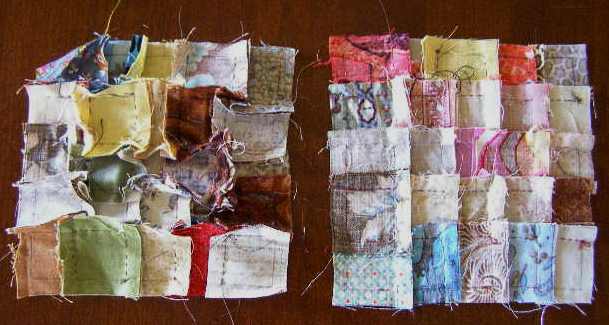
Six 5 by 5 Postage Stamp sections

Six 5 by 5 Postage Stamp sections – these are ironed.

I have twenty hand-sewn 5 square by 5 square blocks completed.  The small size is easy to manage and a block can be completed during a TV show or two.

Randomizing the squares in each block is more difficult than it should be.  I have to fight the tendency to use coordinating colors.

I am also trying not to duplicate any fabrics within each 25-square blocks.

Detail showing fabrics used for squares

Detail showing fabrics used for squares

To add a bit of extra fun, some of the 1″ squares are fussy cut.  The sun face in the detail to the right was fussy cut.

Some of the other fabrics in the detail are vintage fabrics from my grandmother’s Stash.  In the left most column, the top and bottom squares are made with fabric from her stash.  So are the lower two squares in the right side column.

The fun hands fabric at the base of the middle column was in a bag marked “Free” at a fabric store I visited with a friend while traveling last summer!  I was able to cut two squares from the tiny free scrap!   (Destashification Projects rarely include new fabric purchases, but free fabric is always welcomed!)

More blocks - these have not been ironed!

More blocks – these have not been ironed!

Hand-stitching has its benefits – portable, able to watch TV while completing, precision when stitching small pieces, etc., but I had forgotten how difficult it was to iron all those hand stitched seams!

Before and After ironing

Before and After Ironing

Before and after ironing photo illustrates that ironing the squares can really heat up ones fingertips!

This block includes a fussy cut Kitty Face and fussy cut flower.

This block includes a fussy cut Kitty Face and fussy cut flower.

As 80 or so pieced blocks will be required for the finished quilt, this will continue to be long term project for quite some time.

This project is using up those little scraps in The Stash – 1 square inch at a time!

Posted in Home Decor, Quilting, Sewing, Stash Couture | Tagged , | 7 Comments

Squares and Stripes Quilt Pattern

I received a few requests for the pattern I developed for the Quilt Top for my daughter.

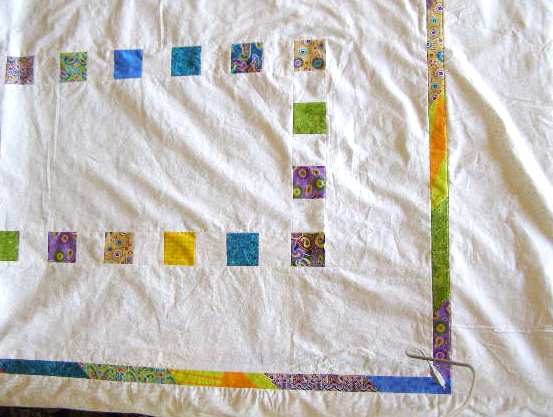
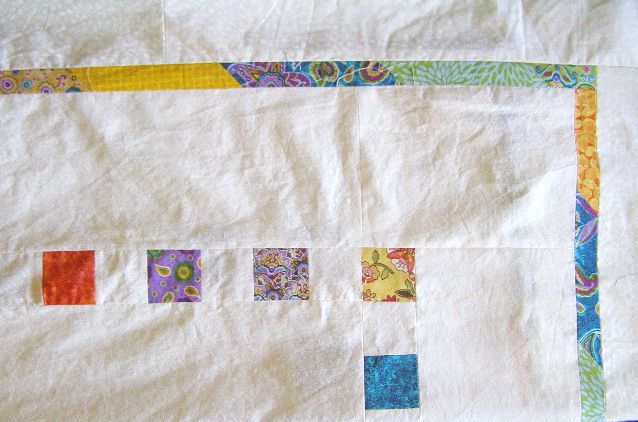
Squares and Stripe Quilt Top

Squares and Stripe Quilt Top

Although Squares and Stripes is the obvious name for this quilt, it might be considered a Goldilocks Quilt.

The first attempt was the wrong color. The second the wrong size.  The third the pattern didn’t work.  But the final version – is just right!

In writing the pattern, I have used a combination of graphs  and verbiage to provide details and instruction.

I do not recommend cutting all the pieces before starting.  This quilt follows more of a sew, measure, then cut-to-the measurement method.  It minimizes frustration and maximizes results!

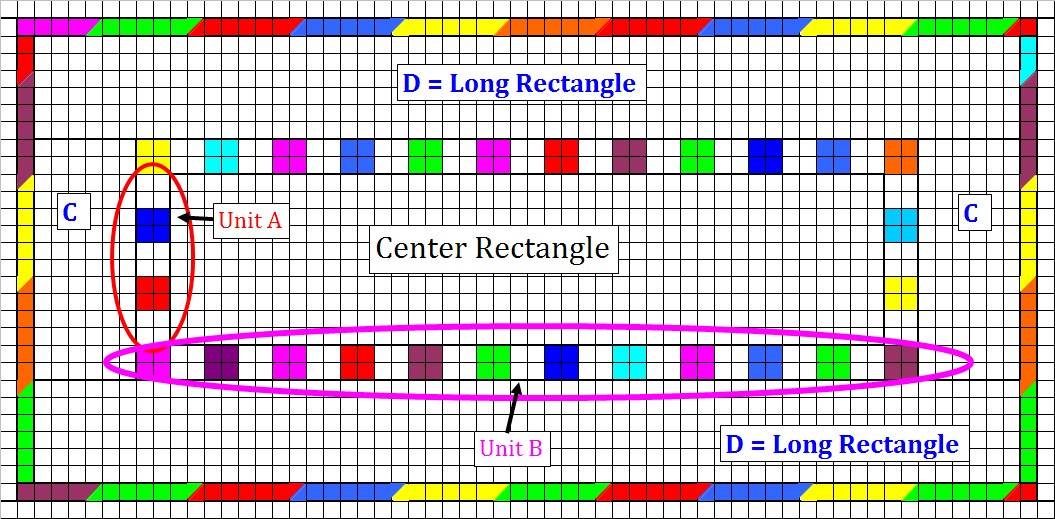
Unit A

Unit A: 1 Graph Square = 1 inch

Notes: 

  1. All seams are sewn RIGHT side together. 
  2. Press seams open after sewing.

Fabrics for squares:

  • 28 2.5″ colored squares
  • 28 2.5″ white squares

Step 1:  Using 1/4″ seam allowances, sew 3 white squares and 2 colored squares into a strip, starting and ending with white squares to make Unit A.

Then make another Unit A.

Unit B

Unit B: 1 Graph Square = 1 Unit

Step 2:  Using 1/4″ seam allowance, sew 12 colored and 11 white squares into a long strip, starting and ending with colored squares to make Unit B.  Then make another Unit B.

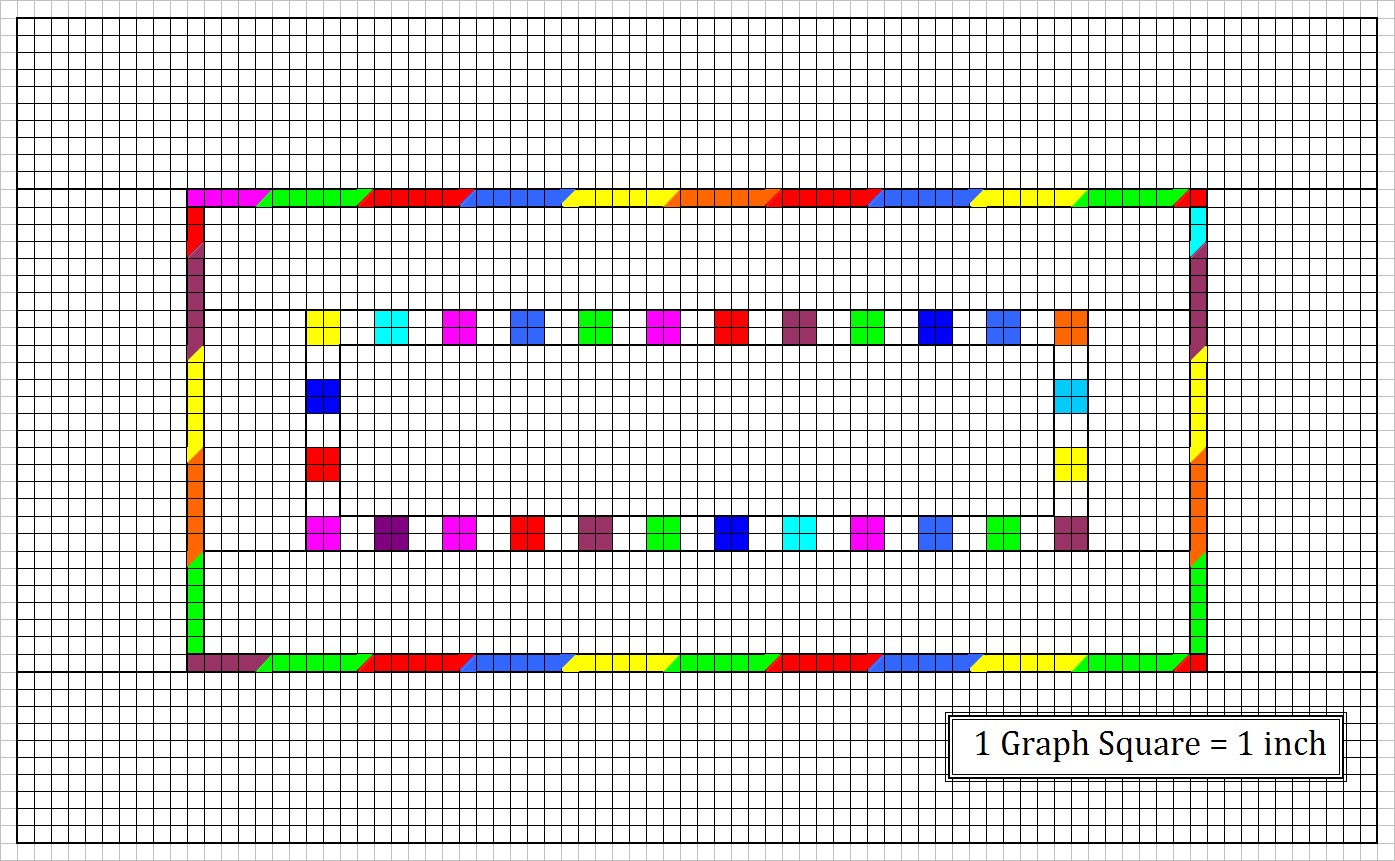
Piecing Diagram

Piecing Diagram:  1 square on graph = 1″

Step 3:  Measure the length of the A Units and the B Units. (Helpful Hint:  Write the measurements down).

If you are among the exclusive club of Perfect 1/4 Inchers – your Unit A will be 10.5″ long and Unit B will be 46.5″ long.  If you are among the rest of us, they will not.

My A Units were 10.25″ long and B Units were 45.5″ long.

Step 4:  Cut a white rectangle for the center the same width as the length of your Unit A’s (somewhere near 10 – 11″) with a length 4″ shorter than the length of your Unit B’s (somewhere near 42 – 43″).  My center rectangle was 10.25″ * 41.5″.

Step 5:  Using 1/4″ seam allowance, sew the Unit A’s to the narrow ends of the center rectangle.  Sew the Unit B’s to the long ends -matching seams of corner squares.


Squares and Stripe

Squares and Stripes

Squares are done! YAY!  Take a minute to enjoy your work! 

Step 6:  Add 4″ to the Unit A measurement found in Step 3.  It will be somewhere near 14″ (if you are a Perfect 1/4 Incher – it will be 14.5″).

Step 7:  Cut two white rectangles 7″ wide * that number (it should be about 14″).  These rectangles are marked “C” on the Piecing Diagram.  Using 1/4″ seam allowance, sew these “C Unit” white rectangles to the shorter edges of the squares.

Detail of stripe strip

Detail of stripe strip

Step 8:  Measure the long side of the quilt top.  If you are a Perfect 1/4 Incher it will be 59.5″.  Mine was 58″.

Step 9:  Cut two white rectangles 7″ wide * your measurement.  These are marked “D” on the Piecing Diagram.  Using 1/4″ seam allowances, sew the long white “D Long” rectangles to the long sides of the quilt top.

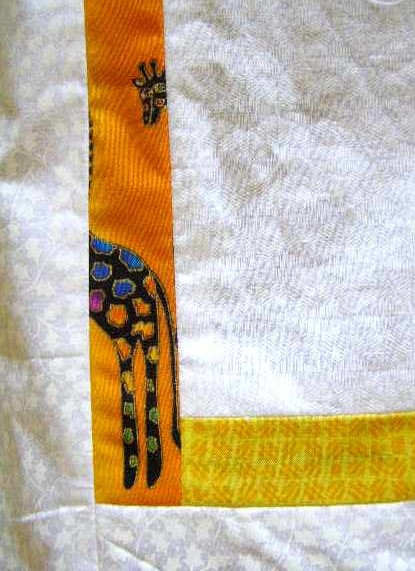
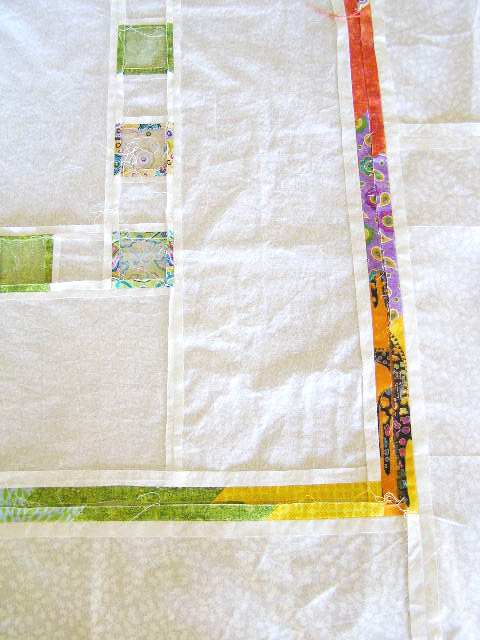
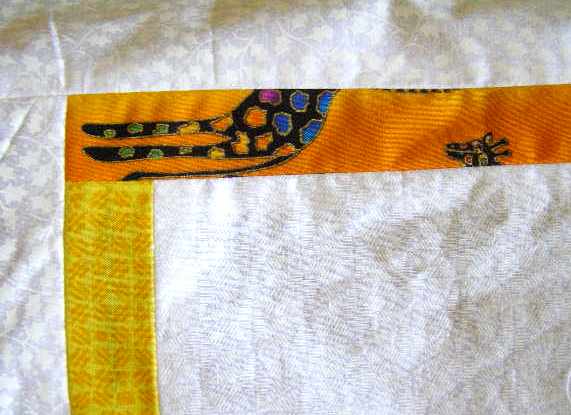
Corner detail. Two whites and a giraffe!

Corner detail of stripe strips (no mitering!)

Now for the stripes:

Step 10:  Cut numerous pieces of colored fabrics into 2.5″ * 9″ strips.  Sew strips together at 45 degree angles. Four stripe strips will be needed.  Two approximately 65″ long and two approximately 15″ long.

Step 11:  Take stripe strips to rotary cutting board and trim to 2″ wide.  I was surprised by how crooked my ever-so-careful 45 degree angle seams made the strips!  But trimming them to 2″ straightened them very easily!

Step 12:  Using 1/2″ seam allowance, sew shorter strips to short ends of quilt top.  Press seams open.  Using 1/2″ seam allowances, sew longer strips to long edges of quilt top.  Press seam open.

Stripes are complete!  Hint:  Since all the strips are out anyway, it may be a good idea to sew all the remaining strips together to form the quilt binding.

Pattern for Squares and Stripes

Pattern for Squares and Stripes

Adding final sashing:

Step 13:  Measure shorter ends of quilt top (should be about 17″) and cut two white rectangles that width * 10 inches wide.  Sew those rectangles to short ends of quilt top using 1/2″ seam allowances.

View of wrong side

View of wrong side: seams pressed open

Step 14:  Measure longer edges of quilt top (should be about 82″).  Cut two white rectangles that measurement * 10″  Sew rectangles to long edges of quilt top using 1/2″ seam allowances.

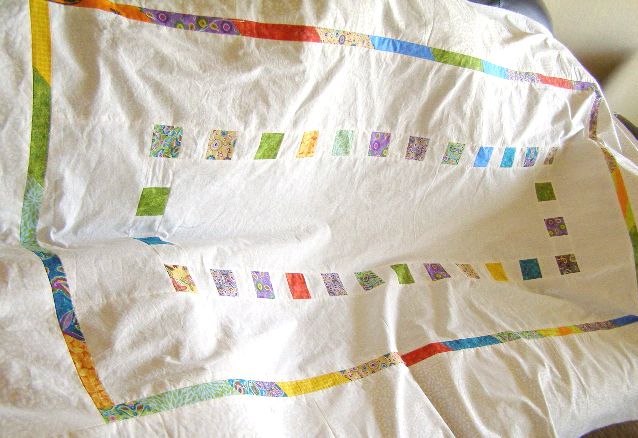
The Quilt Top is complete!


Posted in Beginner Sewing Projects, Home Decor, Modern, Quilting, Sewing, Sewing for a Teenager | Tagged , , , , | 4 Comments

As Ye Sew, So Shall Ye Rip

Persons who sew know that feeling of “something is just not right.” It might be the colors, it might be the design, it might be a combination – but we know we are not happy with some aspect.

Oh, we might try to convince ourselves that maybe if we just continue, the concern will fade or blend in.

So, we foolishly continue to sew – all the time knowing that once that feeling hits, it would behoove us to just change the stitch length to 4 stitches per inch, because eventually, we are just going to take it apart and “fix it.”

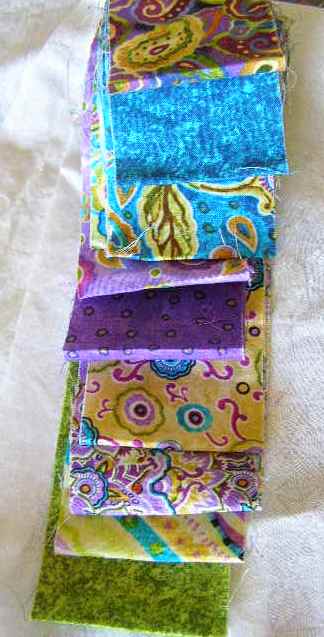
The Jelly Roll

The Jelly Roll

A jelly roll caught my eye because it was the perfect colors for my teenage daughter’s new “sophisticated” bedroom colors (mint green and dark purple).

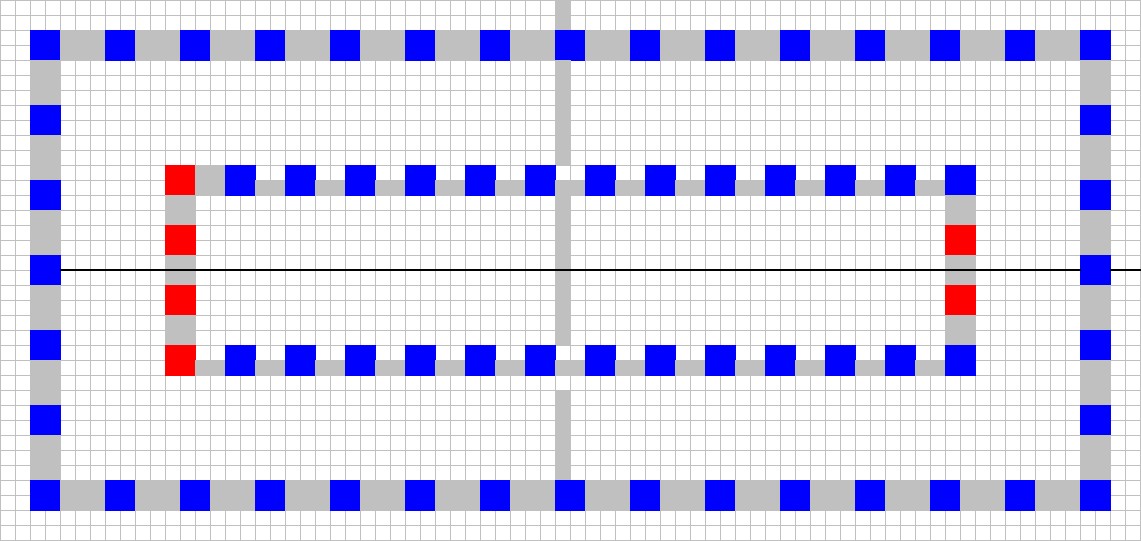
MS Excel Works well for Quilt Designs

MS Excel Works well for Quilt Designs

The simple modern pattern I sketched, measured, charted, re-charted, remeasured and stitched had only two “rows” of squares for a more modern “sophisticated” look.  Using coordinating white prints from The Stash as the background, the inner section went together quickly.

Then that feeling hit!

The top was all but complete when I finally succumbed to the need to red0 it.

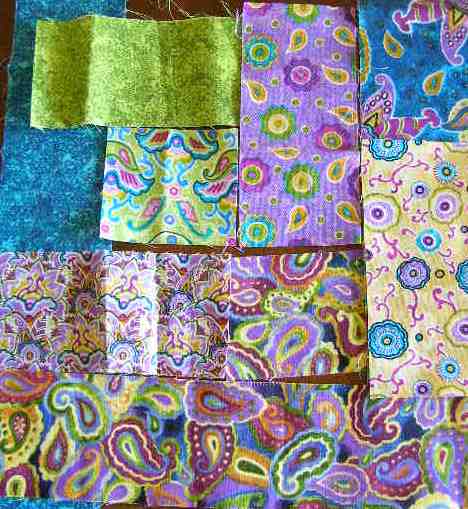
Matchy-matchy colors and overly active patterns

Too Much:  Matchy-matchy colors and overly busy patterns

The colors of the jelly roll were perfect for her room, but the overly-busy designs of the fabric just did not work.  The matchy-matchy fabrics made the quilt top look too prescribed.

I just kept telling myself that with all the white, the patterns and colors would become less of an issue (all the time knowing I would be ripping seams before too long!)

A quick perusal of The Stash located some fun fabrics that contrasted nicely – and coordinated with a painting she was creating for over her bed.

Once the color issue was corrected, I realized the dimensions of the quilt top were closer to that of a table runner than a bed quilt!  (So much for all those measurements and dimension calculations!)

So, more seam ripping!!

But after resizing – the second row of squares did not fit.  Geometry, where x + (x+1) = y and all that.

So more seam ripping!!

So, the second row of squares was replaced with a stripe – which served as a visual separation between the two coordinating but dissimilar white-on-white print fabrics.

With 2.5″ jelly roll fabrics, the 2″ stripe of rectangles should have been perfect – it was not.  Too big.  Too busy.

Rip again.

The stripe was reduced to 1″ and the fabrics joined into the stripe at 45 degree angles.  Much better.

Completed Quilt Top

Completed Quilt Top

I love the expanded color palate – especially after the greys of the MMQ (and luckily, so does the daughter!)

One of these days (years), I will learn that once that “it’s not quite right” feeling hits, sewing should cease.

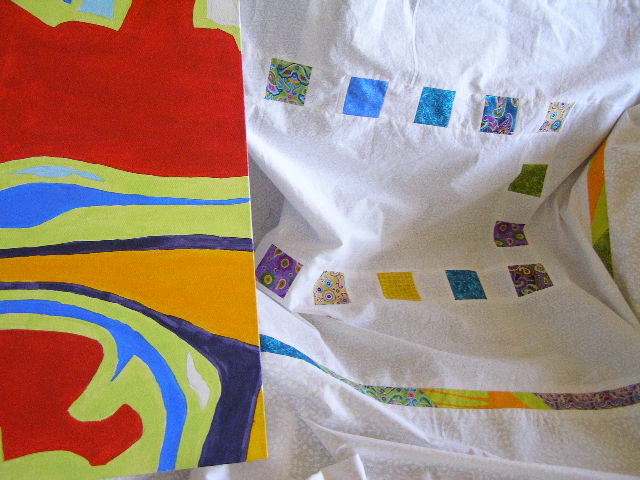
Quilt with color inspiring Painting

Quilt with color inspiring Painting

This photo includes a corner of the modern art painting she is working on – it will hang over the bed on a very purple wall.

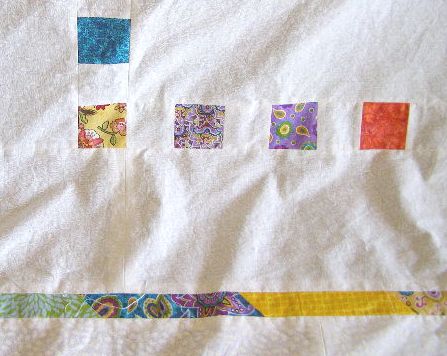
The original jelly roll fabrics were brightened by contrasting fabrics from The Stash.  The green and orange in the lower stripe is a Marimekko Giraffe.  There is also a very small section of Laurel Burch Giraffe fabric in one corner (see last photo below).  But it is the blue tonal print (4th square from top left in photo above) that really highlights the painting.

Detail of Squares and Stripe

Detail of Squares and Stripe

The two coordinating whites are visible in the photo to the right. The white inside the stripe is a hexagonal snowflake print.  Outside the stripe the same white-on-white is a ivy vine print.

Remaining jelly roll fabric and pieces of the other fabrics will be cut into pieces to create the binding.

Corner detail. Two whites and a giraffe!

Corner detail. Two whites and a giraffe!

But applying that binding will have to wait until my longarm quilter has completed her magic!


Posted in Beginner Sewing Projects, Home Decor, Modern, Quilting, Sewing, Sewing for a Teenager | Tagged | 3 Comments

MMQ: Final Block and Sashing

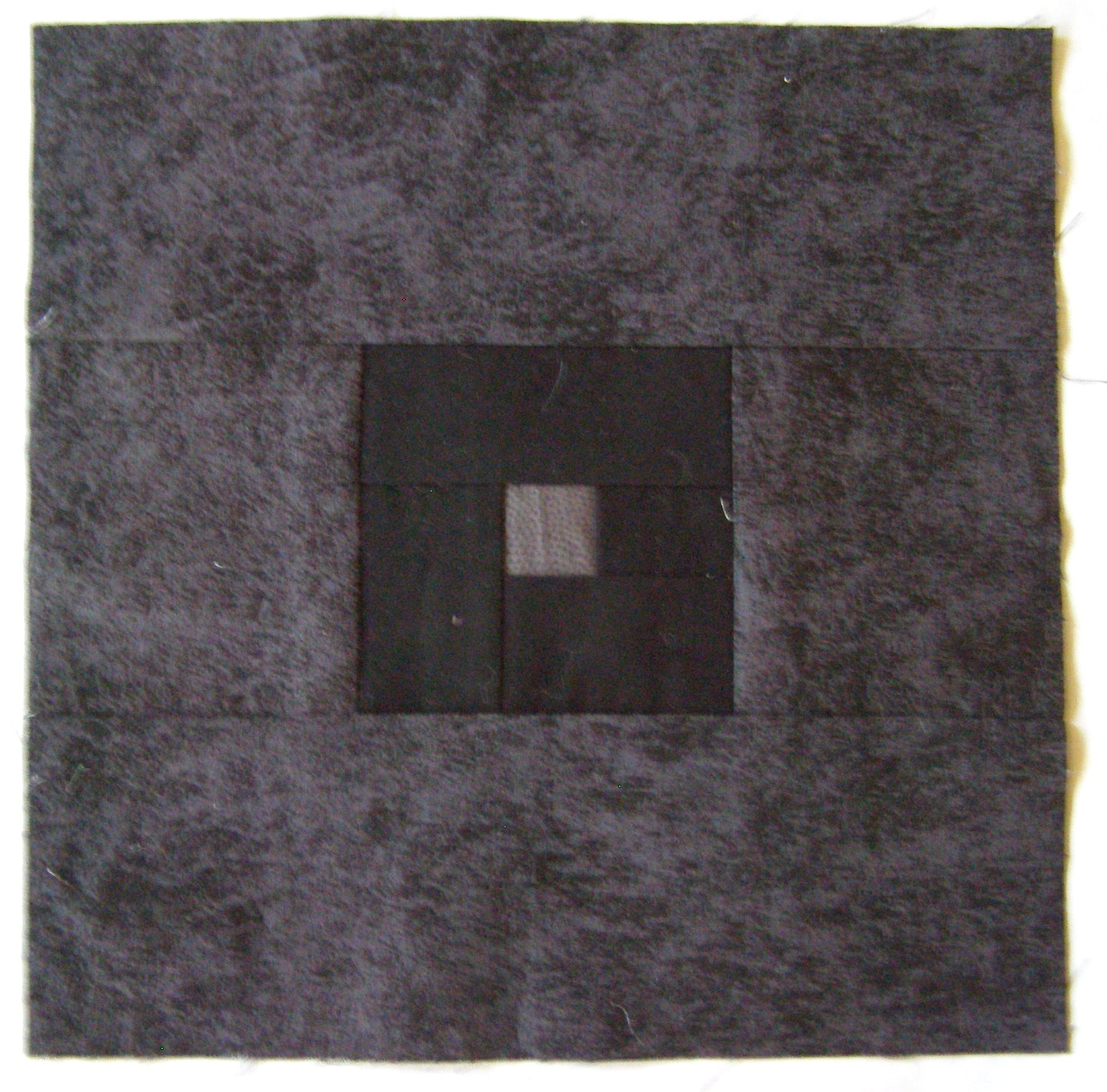
MMQ:  Block 16.

MMQ: Block 16.

The 16th and final block for the MMQ is a simple 1″ square in the middle of the 4″ center design block.

This block is “A Square in a Square in a Square!”

Once all 16 squares are complete – it is time for sashing.

Sashing is the fabric that is sewn between the squares.

The MMQ will have 4″ wide sashing with 1/2″ seam allowances, so will be rotary cut to 5″ wide.  Five 5″ wide strips were cut across the width of the fabric.

Sew sashing fabric to lower edge of squares.

Using rotary ruler and cutter, “square” the sashing to the same 11″ width as the squares.

Laying out squares

Laying out squares on floor – Take a Picture!

Lay out squares (with sashing sewn to bottom) to determine arrangement.  For the MMQ, no two matching borders or designs could be adjacent.

Now, this may seem silly, but it is important – Take a Photo.  Use a camera or a cell phone, but once all the squares are laid out – Take a Picture!

Although we would all like to think we can remember which square goes next to which other square – after picking squares up and carrying them to the sewing machine, I can’t even remember if the seam goes along the top or the bottom!

But, the photo remembers!

Squares sewn into vertical strips.

Squares sewn into vertical strips.

Then sew the squares into vertical strips and add sashing at the top of the strips. Press seams.

Cut five 5″ strips the length of the strips plus some (about 6″) extra.

To help keep the quilt top square while sewing these long seams, I do the following.  Along the long edges of each strip, place a small mark where each of the square’s seam should be placed.  I use a red pencil and mark within the 1/2″ seam allowance, so it will not show after stitching.

Place a mark at 8″(first sashing plus a little extra), then another 10″ (the first square), then 4″(sashing), then 10″ (second square), then 4″ (sashing), etc..

Red marks on long sashing piece match to seams.

Red marks on long sashing piece match to seams.

Pin the sashing to the vertical strips of squares matching these red marks to each seam.

Press seams. Use rotary ruler and cutter to trim excess sashing.  And – the quilt top is complete!  YAY!

Completed Modern Monochromatic Quilt Top

Completed Modern Monochromatic (plus a tiny bit of purple) Quilt Top


MMQ Back

MMQ Back

The quilt back requires only a few seams, and it is ready for the trip to the Long Arm Quilter.

I am thinking I will request the quilting be stitching in a “W”  or horizontal zigzag pattern.

Comment on Color (or lack thereof): Sewing a grey/black monochromatic color-scheme was very challenging – I love the little purple square, but would have preferred MUCMORCOLOR!


Posted in Beginner Sewing Projects, Home Decor, Modern, Quilting, Sewing, Sewing for a Teenager, Stash Couture, Tutorial | Leave a comment